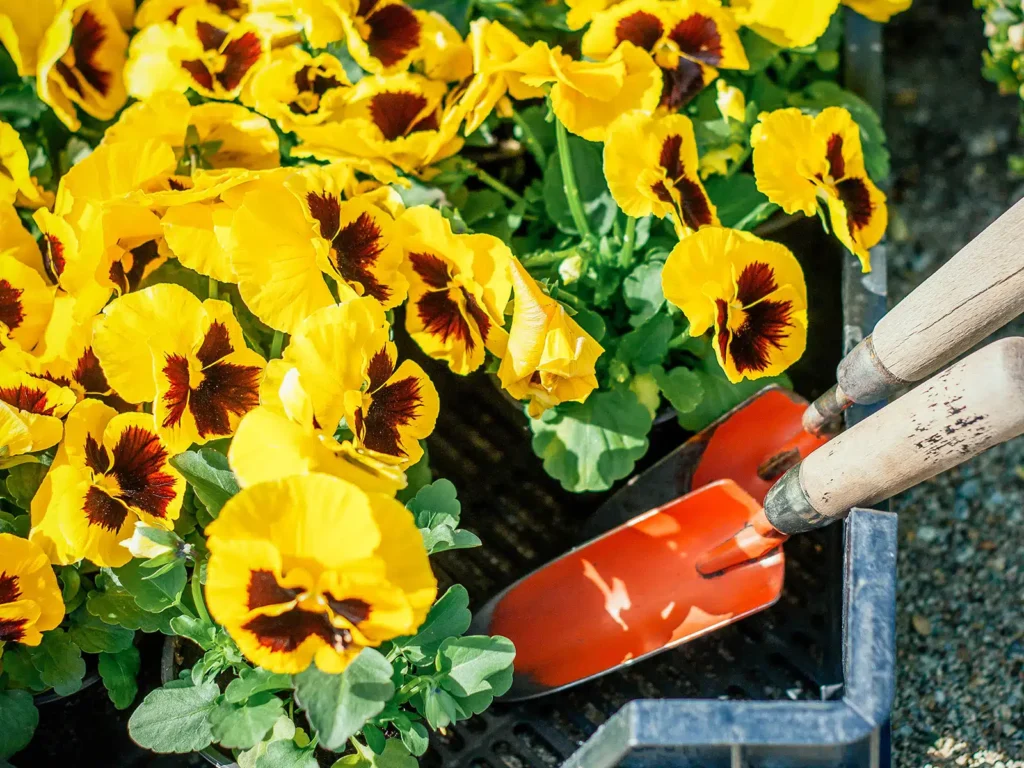
Yellow flowers are among the most recognizable and widely grown flowers in gardens, parks, meadows, and natural landscapes. Their bright colour can range from soft cream and pale lemon to rich gold and deep yellow. Because of this variety, yellow blooms are found across many plant families and include annuals, perennials, bulbs, shrubs, wildflowers, and flowering trees.
Table of Contents
ToggleFor anyone searching for yellow flowers images, yellow flowers names with images, or images of yellow flowers with names, visual identification can be useful because many yellow-flowering plants have similar colours but very different shapes and growing habits.
Popular examples include sunflowers, daffodils, marigolds, yellow roses, black-eyed Susans, buttercups, coreopsis, yellow tulips, goldenrod, and yarrow. Some are commonly cultivated in gardens, while others are native wildflowers or naturalized plants found across parts of the USA and UK.
Why Yellow Flowers Are So Popular
Yellow is associated with sunlight, warmth, brightness, and seasonal change. In landscape design, yellow flowers can create visual contrast against green foliage and darker blooms.
The colour is also found naturally across a remarkable range of flower shapes. A sunflower may have a large central flower head, while a daffodil has a trumpet-shaped corona. A yellow rose has layered petals, and goldenrod produces many small flowers arranged in branching clusters.
This diversity makes yellow flowering plants suitable for different garden styles, including cottage gardens, pollinator gardens, borders, containers, meadow plantings, and formal landscapes.
Yellow Flowers Names With Images
The following plants are some of the most recognizable yellow flowers. When looking through yellow flowers pictures, these characteristics can help with identification.
1. Sunflower (Helianthus annuus)


Sunflowers are among the most recognizable yellow flowers in the world. The common sunflower, Helianthus annuus, produces large flower heads with yellow ray florets surrounding a dark central disc.
Although often associated with tall garden plants, sunflowers are available in many sizes. Some cultivars can grow several metres tall, while dwarf forms are suitable for smaller gardens and containers.
Sunflowers are widely grown throughout the USA and are also cultivated in the UK during suitable growing seasons.
2. Daffodil (Narcissus)


Daffodils are classic spring flowers and one of the most familiar yellow flowers with names and images searched for by gardeners.
Many daffodils have yellow petals surrounding a trumpet-like central corona. However, cultivars can also combine yellow with white or orange.
These bulb plants are strongly associated with spring in the UK and are also widely planted across temperate regions of the USA.
3. Yellow Rose (Rosa)


Yellow roses are cultivated in numerous shades, from pale buttery yellow to strong golden tones.
Modern rose breeding has produced many yellow-flowering cultivars with different flower forms, fragrances, and growth habits. Some are suitable for borders, while others are climbing or shrub roses.
Their layered petals make them particularly distinctive in photos of yellow flowers.
4. Marigold (Tagetes)


Marigolds are popular flowering plants known for their rounded flower heads and warm yellow, gold, and orange colours.
Common garden marigolds include species such as Tagetes erecta and Tagetes patula. Depending on the species and cultivar, plants may be compact or relatively tall.
Their bright flowers are commonly used in containers, borders, bedding displays, and vegetable garden edges.
5. Black-Eyed Susan (Rudbeckia hirta)


Black-eyed Susan is a well-known North American wildflower. It produces golden-yellow petals surrounding a dark brown to black central cone.
The contrast between the yellow petals and dark centre makes the plant easy to recognize in pictures of yellow flowers.
It is widely associated with prairie-style and pollinator-friendly landscapes and can attract bees and butterflies.
6. Coreopsis (Coreopsis)


Coreopsis includes several species and cultivars commonly grown for their cheerful yellow flowers.
The blooms generally have daisy-like forms, with individual petals surrounding a central disc. Some varieties have red or brown markings near the centre.
Coreopsis is particularly valued for its long flowering period and suitability for sunny borders and naturalistic plantings.
7. Yellow Tulips (Tulipa)


Yellow tulips are among the most popular spring bulb flowers. Their cup-shaped blooms can be bright yellow, soft yellow, golden, or combinations of several shades.
Tulip cultivars differ greatly in flower shape and blooming period. Some have simple cup-shaped flowers, while others have fringed, double, or lily-flowered forms.
In both the USA and UK, yellow tulips are commonly planted in spring displays and mixed bulb borders.
8. Goldenrod (Solidago)


Goldenrod is a group of flowering plants belonging to the genus Solidago. Many species are native to North America, while related goldenrod species occur elsewhere.
Goldenrod produces numerous small yellow flower heads arranged in branching clusters. It is an important late-season nectar source for many insects.
Contrary to a common misconception, goldenrod is not usually considered a major cause of seasonal hay fever. Wind-pollinated ragweed is a more significant source of airborne pollen during the same period.
9. Yellow Yarrow (Achillea millefolium)


Yarrow is a hardy perennial commonly found in meadows, grasslands, roadsides, and gardens.
While wild yarrow is often white or pale pink, cultivated varieties can produce strong yellow flower clusters. The flowers are made up of many small individual blooms arranged into flat-topped groups.
Its finely divided foliage provides additional texture even when the plant is not flowering.
10. Yellow Daylily (Hemerocallis)


Daylilies are perennial garden plants known for their trumpet-shaped flowers. Yellow cultivars are particularly common.
Each individual flower typically lasts for only a short period, but established plants can produce numerous buds over the flowering season.
The strap-like foliage forms attractive clumps and makes daylilies useful in borders, slopes, and naturalized plantings.
More Yellow Flower Names
There are many additional species and cultivars that produce yellow blooms. Some recognizable examples include:
- Yellow crocus
- Yellow iris
- Yellow hibiscus
- Yellow chrysanthemum
- Yellow zinnia
- Yellow pansy
- Yellow primrose
- Yellow calendula
- Yellow snapdragon
- Yellow foxglove
- Yellow nasturtium
- Yellow columbine
- Yellow lupine
- Yellow coneflower
- Yellow cosmos
- Yellow gerbera daisy
- Yellow evening primrose
- Yellow buttercup
- Yellow poppy
- Yellow broom
- Yellow acacia
- Yellow jasmine
The appearance of these flowers can vary considerably depending on species and cultivar.
Yellow Wildflowers in the USA
The USA has an extensive variety of native yellow wildflowers. Many are associated with prairies, woodland edges, meadows, wetlands, and open grasslands.
Black-eyed Susan, goldenrod, coreopsis, sunflower species, coneflowers, and various native daisies are common examples.
Native wildflowers can be particularly important to local ecosystems because they provide nectar, pollen, seeds, or habitat for insects and other wildlife.
When identifying yellow flowers in pictures, geographic location is an important clue. A yellow flower found in a California meadow may be a different species from one growing naturally in New England.
Yellow Flowers Commonly Seen in the UK
The UK also has many familiar yellow-flowering plants.
Daffodils are among the country’s most recognizable spring flowers. Buttercups are common in grasslands and lawns, while gorse can produce masses of bright yellow flowers on thorny shrubs.
Other yellow-flowering plants found in British landscapes include primrose, cowslip, dandelion, yellow iris, and various species of hawkweed.
Some are native plants, while others are cultivated ornamentals or naturalized species.
Yellow Flowers by Flower Shape
Flower shape can make identification easier when comparing images of yellow flowers with names.
Daisy-Shaped Flowers
Plants such as coreopsis, black-eyed Susan, sunflower, and many yellow daisies have a central disc surrounded by ray-like petals.
Trumpet-Shaped Flowers
Daffodils and yellow daylilies are examples of plants with prominent trumpet or funnel-shaped structures.
Cup-Shaped Flowers
Yellow tulips and many crocuses have cup-like blooms.
Clustered Flowers
Goldenrod and yarrow produce numerous small flowers grouped into larger flower structures.
Layered Flowers
Yellow roses, marigolds, chrysanthemums, and some dahlias can have dense layers of petals.
Yellow Flowers for Pollinators
Many yellow flowers provide resources for pollinators such as bees, butterflies, hoverflies, and other insects.
Sunflowers can provide pollen and nectar, while goldenrod is particularly important as a late-season nectar source in many North American ecosystems. Coreopsis and black-eyed Susan can also contribute to pollinator-friendly planting schemes.
However, the value of a plant to wildlife depends on its species, cultivar, flowering period, location, and the surrounding habitat.
Using several flowering plants with different bloom periods can provide a more continuous supply of floral resources.
Yellow Flowers in Garden Design
Yellow flowers can be used in many landscape settings. Bright yellow tends to attract visual attention, so yellow-flowering plants can function as focal points or create contrast within a planting scheme.
Pale yellow flowers often create a softer effect and can work well with white, lavender, blue, and pastel pink flowers. Deeper golden shades can create stronger contrast with dark green foliage and purple or blue flowers.
Yellow flowering plants can also be combined with ornamental grasses, shrubs, bulbs, and evergreen plants to create seasonal variation.
Yellow Flowers and Seasonal Interest
Different yellow flowers appear during different parts of the year.
Daffodils and yellow crocuses are strongly associated with early spring. Yellow tulips follow during the main spring bulb season. Roses, daylilies, coreopsis, and many annuals provide colour during summer.
Goldenrod and some other yellow perennials can continue flowering into late summer and autumn.
This seasonal diversity means yellow flowers can appear in landscapes for much of the growing year, depending on climate and plant selection.
Yellow Flowers in the USA and UK
Growing conditions differ significantly between regions of the USA and UK. Temperature, rainfall, soil type, daylight, and local climate all affect plant growth.
Some yellow flowers are highly adaptable, while others require specific conditions. For example, many spring bulbs need a period of winter chilling, whereas warm-season annuals require sufficient heat to grow and flower successfully.
The USDA Plant Hardiness Zone Map is commonly used in the USA to understand average winter temperature ranges. In the UK, the Royal Horticultural Society (RHS) and local growing information can help gardeners understand plant suitability.
Identifying Yellow Flowers From Pictures
When using yellow flowers images for identification, colour alone is rarely enough. Several unrelated plants can have almost identical yellow petals.
Useful identification features include:
- Flower shape
- Number of petals
- Centre colour
- Leaf shape
- Leaf arrangement
- Plant height
- Stem structure
- Blooming season
- Natural habitat
- Geographic location
- Overall plant growth habit
For accurate identification, it is often useful to examine both the flower and foliage rather than relying on a close-up flower photograph.
Final Thoughts on Yellow Flowers
Yellow flowers represent an exceptionally diverse group of plants, ranging from familiar garden favourites to native wildflowers. Sunflowers, daffodils, yellow roses, marigolds, black-eyed Susans, coreopsis, tulips, goldenrod, yarrow, and daylilies are just some of the many examples found in the USA and UK.
For people searching for yellow flowers names with images, photographs can provide a useful starting point, but characteristics such as flower structure, leaves, growing season, and location are also important for identification.
Whether found in a home garden, meadow, woodland edge, public park, or natural landscape, yellow flowers add a distinctive visual element to the environment. Their wide range of shapes, sizes, flowering seasons, and ecological roles makes yellow-flowering plants an extensive and interesting subject for gardeners, nature enthusiasts, and anyone interested in identifying flowers from photographs.