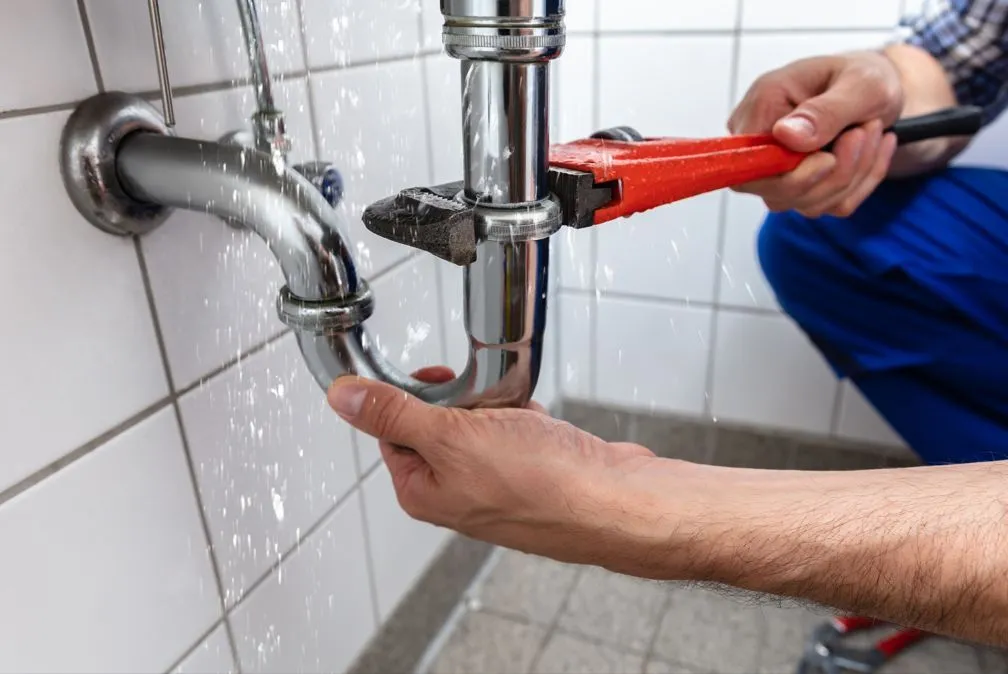
A tankless water heater provides hot water without storing a large volume of heated water in a conventional storage tank. Instead, water passes through the unit and is heated when there is a demand for hot water.
This type of water heating system is widely used in residential properties across the USA and is also found in UK homes, although installation practices, energy sources, building layouts, and terminology can differ between the two markets.
For homeowners considering a tankless system, the main questions are often “how much does a tankless water heater cost?”, what the tankless water heater installation cost will be, and whether an electric or gas model is more appropriate.
The total cost depends on the unit, fuel type, household hot-water demand, electrical or gas infrastructure, venting requirements, plumbing modifications, labour, and installation complexity.
What Is a Tankless Water Heater?
A tankless water heater, also called an on-demand water heater or instantaneous water heater, heats water as it flows through the appliance.
Unlike a traditional storage water heater, it does not continuously maintain a large tank of hot water.
Tankless systems are available in different configurations, including:
- Electric tankless water heaters
- Gas-fired tankless water heaters
- Propane tankless water heaters
- Point-of-use electric units
- Whole-house systems
- Commercial tankless water heaters
The appropriate capacity depends on the number of fixtures that may require hot water at the same time.
Tankless Water Heater Cost
The tankless water heater cost includes more than the purchase price of the appliance.
A complete project may include:
- Water heater
- Plumbing connections
- Electrical work
- Gas connection
- Venting
- Isolation valves
- Pressure relief equipment
- Condensate drainage for applicable gas models
- Mounting hardware
- Labour
- Removal of the old water heater
- Permit or inspection fees where applicable
For a basic residential project, equipment may represent only part of the total expenditure.
A straightforward replacement can be considerably less complicated than converting a property from a traditional storage water heater to a high-output tankless system.
How Much Does a Tankless Water Heater Cost?
The question “how much does a tankless water heater cost?” has no single answer because capacity and fuel type make a major difference.
As a broad planning range in the USA, residential tankless water heater equipment can cost several hundred dollars for smaller electric units and well over $1,000 for larger or higher-output systems. Premium whole-house gas systems can cost substantially more.
Installation can add hundreds or several thousand dollars depending on the existing infrastructure.
In the UK, instantaneous electric water heaters can have different pricing from whole-house gas-fired systems, and installation costs depend strongly on the electrical supply, plumbing configuration, and property type.
The best way to compare prices is therefore to consider the complete installed system rather than the appliance price alone.
Tankless Water Heater Installation Cost
The tankless water heater installation cost depends heavily on whether the existing home infrastructure can support the new system.
For an electric unit, the electrical service may need to accommodate a significant power demand. Larger electric models can require dedicated circuits and substantial electrical capacity.
For a gas unit, the installation may involve:
- Gas supply assessment
- New or upgraded gas piping
- Appropriate venting
- Combustion air requirements
- Condensate drainage for condensing systems
- Flue termination
- Plumbing modifications
These requirements can make gas installation more complex than simply replacing an existing tank.
The location of the heater also matters. Moving the appliance to a new area can increase plumbing and electrical work.
Cost of Tankless Water Heater With Installation
The cost of tankless water heater with installation can vary considerably depending on the project.
A simple replacement where suitable electrical, gas, plumbing, and venting infrastructure already exists may have a lower installation cost.
A conversion project may require additional work.
For example, replacing a traditional gas storage heater with a gas tankless system could require larger gas piping and a different venting arrangement. Replacing a gas water heater with an electric tankless unit may require significant electrical upgrades.
This is why two homes purchasing the same model can have very different final project costs.
Cost of Tankless Water Heater Installed
The cost of tankless water heater installed is usually the most useful figure for homeowners because it reflects the actual project rather than the retail price of the appliance.
A complete quotation should identify:
- Model and capacity
- Fuel type
- Installation labour
- Required electrical work
- Gas work
- Venting
- Plumbing modifications
- Old equipment removal
- Disposal
- Permits
- Warranty
- Additional required components
Homeowners should check whether the quoted price represents a complete installation or only the basic labour charge.
Electric Tankless Water Heaters
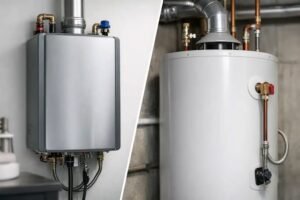
Electric tankless water heaters use electrical heating elements to heat water as it flows through the unit.
They can be relatively compact and do not require combustion venting. This can make them useful in some properties where gas infrastructure is unavailable.
However, high-output electric units can have substantial electrical requirements.
Before selecting an electric model, the home’s electrical service should be evaluated. A property with an older or limited electrical supply may require an upgrade before installation.
Best Electric Tankless Water Heater
The phrase “best electric tankless water heater” depends on household requirements rather than one universally suitable model.
Important factors include:
- Maximum flow rate
- Incoming water temperature
- Required temperature rise
- Electrical capacity
- Number of simultaneous fixtures
- Available installation space
- Controls
- Energy efficiency
- Warranty
- Local service availability
A small point-of-use heater may be suitable for a single sink, while a whole-house system needs substantially greater capacity.
For this reason, comparing models by brand name alone can be less useful than comparing their performance specifications.
Gas Tankless Water Heaters
Gas tankless water heaters generally use natural gas or propane to heat water through a heat exchanger.
They can provide high heating output and may be suitable for households with significant simultaneous hot-water demand.
However, installation involves combustion and exhaust requirements. Proper venting is essential.
Modern condensing gas tankless heaters can achieve high thermal efficiency by recovering additional heat from combustion gases. They may also require condensate drainage.
Non-condensing models have different venting requirements.
Best Tankless Water Heater Gas
The best tankless water heater gas option depends on the home’s gas supply, water demand, climate, installation location, and required flow rate.
Important specifications include:
- Gas input rating
- Maximum flow rate
- Minimum activation flow
- Temperature range
- Energy efficiency
- Venting configuration
- Condensing or non-condensing design
- Freeze protection
- Warranty
- Service requirements
In colder regions of the USA and UK, incoming water can be significantly colder during winter. This affects the amount of energy required to achieve the desired hot-water temperature.
Flow Rate and Temperature Rise
Sizing a tankless water heater requires consideration of both flow rate and temperature rise.
Flow rate is commonly measured in gallons per minute in the USA and litres per minute in the UK.
Potential household demand can include:
- Shower
- Bathtub
- Kitchen sink
- Bathroom sink
- Dishwasher
- Washing machine
If several fixtures operate simultaneously, the heater needs enough output to maintain the required water temperature.
A system that is too small may struggle during periods of high demand, while an unnecessarily large system may increase equipment and installation costs.
Tankless Versus Traditional Water Heaters
Traditional storage water heaters maintain a reservoir of heated water. Tankless systems heat water only when required.
| Feature | Tankless System | Storage Water Heater |
|---|---|---|
| Water storage | No large storage tank | Large hot-water tank |
| Heating method | On demand | Reheats stored water |
| Space requirement | Generally compact | Requires tank space |
| Continuous hot water | Possible with adequate capacity | Limited by tank size |
| Installation | Can be complex | Often simpler for replacement |
| Initial cost | Often higher | Often lower |
| Energy use | Avoids some standby losses | Has standby heat losses |
| Maintenance | Requires periodic maintenance | Also requires maintenance |
The most suitable option depends on the property, household demand, available infrastructure, and long-term priorities.
Tankless Water Heater Cost Factors
Several factors influence the total tankless water heater cost.
Unit Capacity
Higher-output units generally cost more than smaller point-of-use models.
Fuel Type
Electric and gas systems have different equipment and installation requirements.
Electrical Service
Large electric systems may require dedicated circuits or electrical upgrades.
Gas Infrastructure
Gas systems may require larger supply lines and suitable venting.
Plumbing Changes
Relocating an appliance or changing pipe arrangements can increase labour.
Venting
Gas appliances require correctly designed exhaust systems.
Location
Labour rates vary considerably between regions in the USA and UK.
Water Conditions
Hard water can contribute to mineral scale inside heat exchangers. Water treatment or more frequent maintenance may be relevant in areas with hard water.
Maintenance Requirements
Tankless systems require maintenance even though they do not contain a traditional storage tank.
Gas systems should be inspected according to manufacturer requirements, while heat exchangers can require descaling in areas with hard water.
Maintenance can involve:
- Flushing the heat exchanger
- Removing mineral deposits
- Checking filters
- Inspecting connections
- Checking combustion and venting on gas models
- Inspecting valves
- Checking error codes and controls
Regular maintenance can help preserve performance and identify problems before they become more significant.
Tankless Water Heaters in the USA and UK
Tankless water heating technology is used differently in the USA and UK.
In the USA, whole-house tankless gas systems are relatively common in many regions, while electric models are also used for smaller applications and homes without gas service.
In the UK, instantaneous electric water heating has a long history, particularly for showers and point-of-use applications. Gas combination boilers also provide hot water without a separate storage tank in many homes.
Electrical standards, gas regulations, building requirements, water pressure, and installation practices differ between the two countries. Local regulations should therefore be considered when planning an installation.
Are Tankless Water Heaters More Expensive?
The initial cost of tankless water heater installed can be higher than replacing a conventional storage heater.
However, purchase price is only one part of the comparison.
Homeowners may also consider:
- Energy consumption
- Available space
- Maintenance
- Expected service life
- Hot-water demand
- Future replacement costs
- Utility prices
- Installation requirements
A system that is more expensive initially may have different operating characteristics from a lower-cost storage system.
Final Thoughts on Tankless Water Heater Cost
The tankless water heater cost depends on the appliance, fuel type, capacity, installation conditions, and local labour rates. The cost of tankless water heater with installation can be substantially different from the retail price of the unit because electrical upgrades, gas piping, venting, plumbing, permits, and removal of existing equipment may be required.
When comparing the best tankless water heater, homeowners should focus on capacity, flow rate, temperature rise, fuel availability, efficiency, maintenance requirements, and compatibility with the property.
Electric and gas tankless water heaters both have distinct advantages and installation considerations. The appropriate choice depends on the home’s infrastructure and hot-water requirements.
For homeowners in the USA and UK, obtaining an installed quotation that clearly separates equipment, labour, modifications, and additional requirements provides a more useful basis for evaluating the overall tankless water heater cost installed.