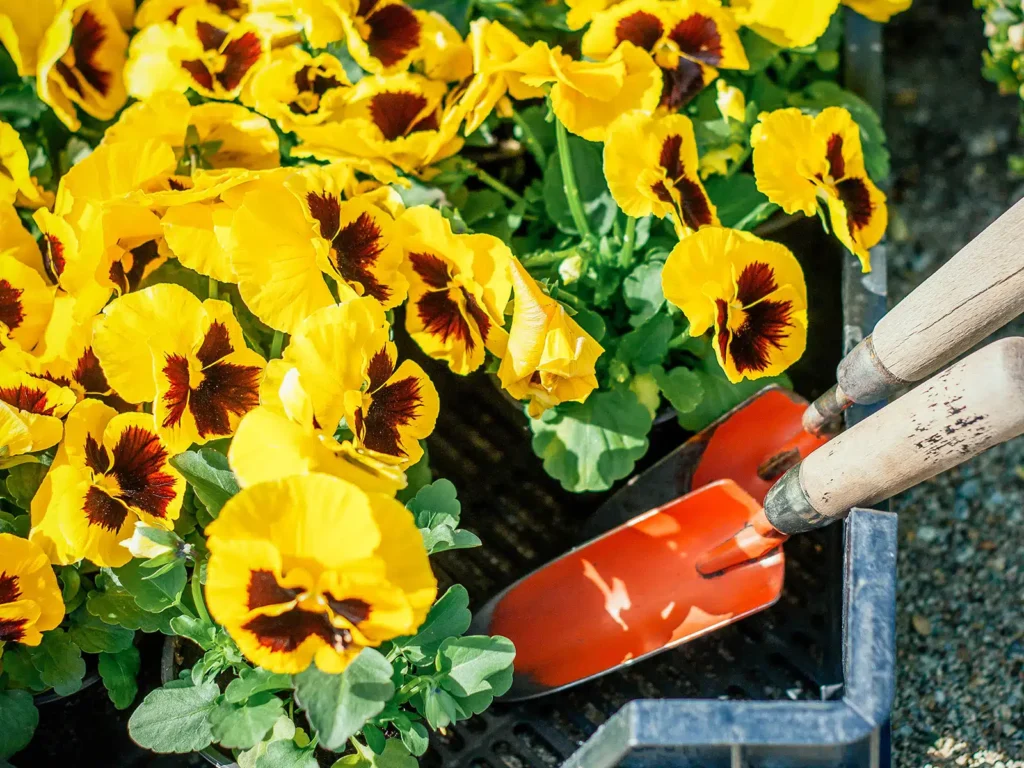
The daisy is one of the most familiar flowers found in gardens, meadows, lawns, roadsides, and natural landscapes. Its simple flower form, usually featuring a central disc surrounded by ray-like petals, makes it easy to recognize. While the classic image of a daisy is a white flower with a yellow centre, the daisy family includes an enormous range of plants with different colours, sizes, shapes, and growing habits.
Table of Contents
ToggleThe word daisies describes many different plants rather than one single botanical species. Numerous daisy-like flowers belong to the large Asteraceae family, which also includes sunflowers, asters, chrysanthemums, coneflowers, and zinnias.
For gardeners and nature enthusiasts in the USA and UK, understanding the different types of daisies can help distinguish familiar lawn daisies from larger ornamental varieties and native wildflowers. Some are compact plants suitable for borders, while others can become substantial flowering perennials.
What Is a Daisy?
A daisy is generally recognized by its composite flower head. What appears to be one large flower is actually made up of many tiny individual flowers.
The central disc contains numerous small disc florets, while the surrounding white, yellow, pink, or other coloured structures are ray florets. This arrangement is characteristic of many plants in the Asteraceae family.
The name “daisy” is used for numerous unrelated or distantly related plants that share this visual appearance. Consequently, not every flower commonly called a daisy belongs to the same genus.
The classic lawn daisy, for example, is Bellis perennis, while the oxeye daisy is Leucanthemum vulgare.
Common Types of Daisies
There are many daisy types cultivated or naturally found in the USA and UK. Their appearance can vary from tiny lawn flowers to large, showy garden plants.
1. Common Daisy (Bellis perennis)
The common daisy is one of the most recognizable daisies in the UK and many other parts of Europe.
It produces small flower heads with white ray florets surrounding a yellow centre. The plant forms a low rosette of spoon-shaped leaves and can flower for much of the year in mild conditions.
Common daisies are frequently seen in lawns, grasslands, parks, and meadows.
Unlike large ornamental daisies, they remain close to the ground and can tolerate regular mowing by producing flowers on short stems.
2. Oxeye Daisy (Leucanthemum vulgare)
Oxeye daisy is a larger perennial species with classic white petals and yellow centres.
It is native to Europe and has become naturalized in various parts of North America. The flowers are noticeably larger than those of the common lawn daisy.
Oxeye daisies are often found in meadows, grasslands, roadsides, and open habitats. Their simple flower structure makes them one of the most recognizable white daisy varieties.
3. Shasta Daisy (Leucanthemum × superbum)
Shasta daisy is a popular ornamental perennial developed through hybridization.
The flowers typically have large white ray florets surrounding bright yellow centres. They are substantially larger and more prominent than common lawn daisies.
Shasta daisies are frequently planted in perennial borders, cottage gardens, cutting gardens, and mixed landscapes.
Several cultivars differ in flower size, petal arrangement, plant height, and flowering period.
4. African Daisy (Osteospermum)
African daisies are popular ornamental plants recognized for their colourful flowers.
Although white forms exist, African daisies can also produce purple, pink, orange, yellow, and other colours. Their petals can sometimes have distinctive central markings.
They are commonly grown as seasonal bedding plants and container flowers in suitable climates.
Unlike many traditional white daisies, African daisies offer a much wider colour range.
5. Gerbera Daisy (Gerbera)
Gerbera daisies are among the most commercially important daisy-like flowers.
They produce large, colourful flower heads with prominent central discs. Colours include white, yellow, orange, red, pink, and combinations of these shades.
Gerbera flowers are widely used as cut flowers because of their strong stems and striking appearance.
Although commonly called daisies, Gerbera belongs to its own genus within the Asteraceae family.
6. Painted Daisy (Tanacetum coccineum)
Painted daisies are perennial flowering plants known for their colourful blooms.
Their flowers can be pink, red, white, or related shades, usually surrounding yellow centres.
The finely divided foliage adds texture to the plant even when flowers are not present.
Painted daisies can be incorporated into mixed borders and naturalistic perennial plantings.
7. Gloriosa Daisy (Rudbeckia hirta)
Gloriosa daisy is another common name associated with Rudbeckia hirta, which is also widely known as black-eyed Susan.
The flowers typically have yellow or golden ray florets surrounding a dark central cone.
These plants are native to North America and are frequently found in gardens, meadows, roadsides, and pollinator plantings.
Their strong contrast between yellow petals and dark centres makes them particularly showy daisies.
8. Michaelmas Daisy
The term Michaelmas daisy is commonly used for several species and cultivars of Symphyotrichum.
Unlike traditional white daisies, these plants often produce masses of blue, violet, purple, or pink flowers with yellow centres.
They typically flower in late summer and autumn, providing colour after many other perennial plants have finished blooming.
Michaelmas daisies are particularly valuable in borders and pollinator-friendly landscapes because their late flowering period provides nectar when fewer flowering plants may be available.
White Daisy Varieties
White daisies are perhaps the most familiar form of daisy flowers.
Several different plants produce white flowers with yellow centres, including:
- Common daisy
- Oxeye daisy
- Shasta daisy
- English daisy cultivars
- Some African daisy varieties
- Some feverfew varieties
- Several native North American species
Despite their similar appearance, these plants can differ greatly in height, leaf structure, flowering period, and habitat.
For example, Bellis perennis is a low-growing lawn plant, while Shasta daisies can develop into substantial perennial clumps.
Showy Daisies for Gardens
The phrase showy daisies can refer to larger or particularly striking daisy-like plants.
Shasta daisies, gerberas, African daisies, painted daisies, and many Rudbeckia cultivars can create strong visual displays.
Their flower size, colour contrast, and upright growth make them useful for attracting attention within a planting scheme.
Some showy varieties are also valuable as cut flowers.
Daisy Flower Colours
Although white is strongly associated with daisies, there is considerable colour diversity.
White Daisies
White daisies with yellow centres are the classic form. Shasta daisies and oxeye daisies are familiar examples.
Yellow Daisies
Some Rudbeckia species and cultivars produce bright yellow or golden flowers. These can create a warm, sunny effect in summer borders.
Pink Daisies
Pink flowers occur in painted daisies, African daisies, gerberas, and several other related plants.
Purple and Blue Daisies
Asters and Michaelmas daisies provide blue, violet, and purple daisy-like flowers, particularly in late summer and autumn.
Orange and Red Daisies
Gerberas and African daisies can produce intense orange, red, and coral flowers.
This range demonstrates why the term “daisy” covers a much broader group than the familiar white lawn flower.
Flowering Daisy Plants in the USA
The USA has a wide range of native and cultivated daisy-like plants.
Black-eyed Susan, coneflowers, sunflowers, asters, coreopsis, and various native daisies occur naturally or are widely cultivated across different regions.
Native species are particularly important in ecological landscapes because they can provide nectar, pollen, seeds, and habitat for insects and other wildlife.
However, the suitability of a particular species depends on local climate and soil conditions. A plant that performs well in the Northeast may require different conditions in the Southwest or Southeast.
Daisies in the UK
Daisies are deeply familiar in the British landscape.
The common daisy is frequently found in lawns, parks, sports fields, and grassland. Oxeye daisies occur in meadows, roadside areas, and other open habitats.
Garden centres and nurseries also offer many ornamental daisy varieties, including Shasta daisies, African daisies, gerberas, and asters.
The Royal Horticultural Society (RHS) provides information on numerous daisy-related plants and their horticultural characteristics.
Daisy Flower Structure
One interesting aspect of the daisy flower is that what looks like a single bloom is actually a flower head containing many tiny flowers.
The central yellow portion is made up of disc florets. The surrounding petal-like structures are ray florets.
This structure is known as a capitulum or flower head and is characteristic of many members of the Asteraceae family.
The arrangement allows numerous small flowers to function visually as one larger structure, helping attract pollinators.
Daisies and Pollinators
Many flowering daisy plants are useful to pollinating insects.
Bees, butterflies, hoverflies, beetles, and other insects may visit daisy-like flowers for nectar and pollen.
Plants such as asters, Rudbeckia, coreopsis, and native daisies can be particularly useful in wildlife-friendly landscapes.
Flowering periods also matter. Late-season daisies such as asters can provide valuable nectar when many summer flowers are beginning to fade.
A diverse planting containing species that flower at different times can support pollinators across a longer portion of the growing season.
Daisies in Landscape Design
Daisies are adaptable landscape plants and can be used in several garden styles.
Low-growing common daisies are associated with lawns and natural grassland settings. Shasta daisies can be used in perennial borders, while taller Rudbeckia varieties can create strong vertical colour.
African daisies and gerberas can be used in containers and seasonal displays in appropriate climates.
Daisies also combine well with ornamental grasses, lavender, salvia, roses, yarrow, coneflowers, and other flowering perennials.
Daisy vs. Daisy-Like Flowers
One of the challenges when identifying daisy types is that many flowers have a similar appearance without being closely related.
Sunflowers, asters, chrysanthemums, coneflowers, gerberas, and black-eyed Susans all have daisy-like flower heads.
This is because the composite flower structure evolved across many related groups within the Asteraceae family.
For accurate identification, it is useful to examine the leaves, flower structure, plant height, stem, flowering season, and geographic location.
The Spelling “Dasiy”
The spelling “dasiy” is a common typing variation of “daisy.” Searches using this spelling generally refer to the same flower and related information.
For botanical and gardening purposes, daisy is the correct standard spelling.
Daisy Flowers Across the Seasons
Different types of daisies can provide flowers during different parts of the year.
Common daisies may flower for extended periods in mild climates. Shasta daisies generally provide summer flowers, while Rudbeckia is strongly associated with summer and early autumn.
Asters and Michaelmas daisies can continue the daisy-like display into late summer and autumn.
This broad seasonal range is one reason daisies remain common in gardens and natural landscapes.
Final Thoughts on Daisies
The daisy is much more than a simple white flower growing in lawns. The term encompasses a broad collection of plants with different colours, sizes, flower structures, and growing habits.
Common daisies, oxeye daisies, Shasta daisies, African daisies, gerberas, painted daisies, Rudbeckia, and Michaelmas daisies represent only a portion of the diversity associated with daisies.
For anyone interested in types of daisies, identifying the botanical genus can provide a clearer understanding of the plant than its common name alone. Flower colour, petal arrangement, foliage, mature size, flowering season, and natural habitat can all help distinguish one variety from another.
Across the USA and UK, these flowering plants contribute colour to lawns, gardens, meadows, borders, parks, and natural habitats. Their familiar flower structure, wide range of colours, and value to pollinators make daisy-like plants an enduring part of both cultivated and natural landscapes.