Hydrangeas and peonies are two of the most admired flowering plants in gardens across the United States and the United Kingdom. Both are known for their attractive blooms, rich colours and ability to create beautiful landscapes. While hydrangeas produce large flower clusters that can add volume to garden borders, peonies are valued for their layered petals, fragrance and elegant appearance. These flowering plants are often used in cottage gardens, formal landscapes, flower beds, cut-flower arrangements and wedding bouquets.
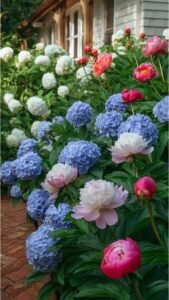
Although hydrangeas and peonies are frequently planted together, they have different growth habits, flowering seasons, care requirements and characteristics. Understanding these differences can help gardeners choose the right varieties, plan garden layouts and maintain healthy plants throughout the growing season.
The combination of peonies and hydrangeas is particularly popular because their flowers complement each other in shape, texture and colour. From white and blush pink blooms to blue, purple and deep red flowers, these plants offer many possibilities for garden design and floral arrangements.
What Are Hydrangeas and Peonies?
Hydrangeas are flowering shrubs belonging to the genus Hydrangea. They are recognised for their large flower heads, which may consist of clusters of small flowers arranged in rounded mophead shapes, flattened lacecap formations or elongated panicles. Depending on the species and variety, hydrangeas can bloom in white, pink, blue, purple, green and red shades.
Hydrangeas are commonly grown in garden borders, woodland gardens, foundation plantings and containers. Some varieties thrive in partial shade, while others tolerate more sunlight, depending on their species and local climate.
Peonies are perennial flowering plants belonging to the genus Paeonia. They produce large, often fragrant flowers with layered petals that can range from simple single blooms to densely packed double flowers. Peonies are available in shades of white, pink, red, coral, yellow and purple.
Unlike many hydrangeas, most herbaceous peonies die back to the ground during winter and return in spring. They are long-lived garden plants that can remain in the same location for many years when planted in suitable conditions.
Both plants are widely used in traditional gardens, contemporary landscapes and seasonal floral arrangements.
Hydrangeas vs Peonies: Key Differences
Hydrangeas and peonies may share a similar reputation as ornamental flowering plants, but their appearance, structure and growing requirements are different.
| Feature | Hydrangeas | Peonies |
|---|---|---|
| Botanical genus | Hydrangea | Paeonia |
| Plant type | Mostly shrubs, with some climbing or tree-like forms | Herbaceous perennials, woody shrubs or hybrids |
| Flower shape | Rounded clusters, lacecap or panicle flowers | Single, semi-double, double or anemone-shaped flowers |
| Flowering season | Late spring to autumn, depending on variety | Late spring to early summer |
| Flower colours | White, pink, blue, purple, green and red | White, pink, red, coral, yellow and purple |
| Fragrance | Some varieties are fragrant | Many varieties are fragrant |
| Sunlight | Often partial shade to sun, depending on variety | Generally full sun to light partial shade |
| Water needs | Consistent moisture | Moderate moisture with well-drained soil |
| Winter behaviour | Depends on species and variety | Herbaceous types die back; tree peonies retain woody stems |
| Soil preference | Moist, well-drained soil | Fertile, well-drained soil |
| Garden use | Shrub borders, hedges, containers and woodland gardens | Perennial beds, borders, cut-flower gardens |
These characteristics vary according to individual cultivars, climate and growing conditions.
Flower Appearance and Colours
Hydrangea Flowers
Hydrangea flowers are often recognised by their large, rounded flower heads. Many varieties produce clusters of small flowers that create a soft, full appearance. The flower heads may be composed of decorative sterile flowers, smaller fertile flowers or a combination of both.
Bigleaf hydrangeas (Hydrangea macrophylla) are particularly well known for their colour variations. Some cultivars can produce pink or blue flowers depending partly on soil chemistry and the availability of aluminium. Acidic soil conditions can encourage blue flowers in suitable varieties, while more alkaline conditions may result in pink blooms.
However, not all hydrangeas change colour in this way. White-flowering varieties, panicle hydrangeas and many other species generally maintain their characteristic flower colours regardless of soil pH.
Popular hydrangea types include:
-
Bigleaf hydrangea (Hydrangea macrophylla): Known for mophead and lacecap flower forms.
-
Panicle hydrangea (Hydrangea paniculata): Produces cone-shaped flower clusters and is often more tolerant of sun and cold.
-
Smooth hydrangea (Hydrangea arborescens): Known for rounded flower heads, including popular white varieties.
-
Oakleaf hydrangea (Hydrangea quercifolia): Recognised by its oak-shaped foliage, textured flowers and attractive autumn colour.
-
Climbing hydrangea (Hydrangea anomala subsp. petiolaris): A climbing plant suitable for walls, fences and shaded structures.
Peony Flowers
Peonies produce individual flowers that can be large, rounded and highly decorative. Their petals may be arranged in loose layers or dense, fluffy formations. Some varieties have prominent central stamens, while others feature a fuller flower structure that almost completely conceals the centre.
Peony flowers are commonly associated with spring and early summer. Depending on the variety and region, they may bloom from April through June or into early July.
Common peony flower forms include:
-
Single peonies: Flowers with a relatively simple arrangement of petals and a visible centre.
-
Double peonies: Flowers with many layers of petals and a fuller appearance.
-
Semi-double peonies: Flowers with several layers of petals but a visible central structure.
-
Anemone-form peonies: Flowers with distinctive central petaloids surrounded by outer petals.
-
Japanese-form peonies: Flowers with prominent central stamens or petaloids.
Peonies are especially popular in cut-flower gardens because their blooms are suitable for bouquets, arrangements and decorative displays.
Growing Hydrangeas and Peonies Together
Growing hydrangeas and peonies together can create a balanced garden with contrasting flower shapes and foliage textures. Hydrangeas offer large flower clusters and a shrub-like structure, while peonies add seasonal colour through their distinctive flowers and leafy growth.
The key to planting these flowers together is to provide enough space and select varieties with compatible sunlight and soil requirements.
Choosing the Right Location
Peonies generally perform well in locations receiving approximately six hours of sunlight or more, although some varieties benefit from afternoon shade in warmer climates. Hydrangeas have more varied sunlight requirements. Bigleaf and oakleaf hydrangeas commonly prefer partial shade, while panicle hydrangeas can tolerate more sunlight.
When planting hydrangeas and peonies in the same garden bed, choose a location that provides morning sunlight and some afternoon protection if the climate is particularly hot.
In cooler regions of the USA and UK, a sunnier location may be suitable for both plants, particularly when soil moisture is maintained.
Maintaining Proper Spacing
Hydrangeas can become large shrubs, so planting them too close to peonies may create competition for sunlight, water and nutrients.
Peonies also need good air circulation to reduce the risk of fungal diseases. Their foliage should not be overcrowded by neighbouring shrubs.
Consider the mature size of each plant before placing them in a garden bed. Smaller hydrangea cultivars can be suitable companions for peonies in compact gardens, while larger varieties may require separate planting areas.
Soil and Drainage
Both hydrangeas and peonies prefer well-drained soil, but hydrangeas generally appreciate more consistent moisture.
Peonies are particularly sensitive to waterlogged conditions, which can encourage root problems. Hydrangeas may also suffer when their roots remain in poorly drained soil.
Improving garden soil with organic matter, such as well-rotted compost, can help improve soil structure, moisture retention and drainage.
Avoid planting either flower in areas where water collects after heavy rain.
Sunlight, Watering and Soil Requirements
Hydrangeas and peonies can thrive in similar garden environments, but their care routines should not be identical.
Sunlight Requirements
Peonies generally need plenty of sunlight to produce strong stems and abundant flowers. A location receiving around six hours of direct sunlight is often suitable. In areas with hot summers, some afternoon shade can help prevent stress.
Hydrangeas are more flexible. Many bigleaf hydrangeas grow well in partial shade, especially when protected from intense afternoon sunlight. Panicle hydrangeas are generally more sun-tolerant, making them suitable for open garden spaces.
Planting tip: If both flowers are being planted in the same border, position peonies where they receive more sunlight and place shade-tolerant hydrangeas toward the side with slightly less sun.
Watering
Hydrangeas usually need regular watering during active growth, particularly during warm and dry weather. Their broad leaves can lose moisture quickly, so they may wilt when soil becomes dry.
Peonies require moderate watering. Newly planted peonies need consistent moisture while establishing their root systems, but mature plants generally tolerate short periods of dry weather better than many hydrangeas.
Water both plants at the soil level rather than wetting their foliage frequently. Deep watering helps encourage stronger root development and reduces unnecessary moisture on the leaves.
Soil Conditions
Hydrangeas prefer moist, fertile soil with good drainage. Soil pH may influence the colour of certain bigleaf hydrangea varieties, particularly blue and pink cultivars.
Peonies grow best in fertile soil that drains well. Heavy clay soil may need improvement before planting, while excessively sandy soil may benefit from organic matter.
For both plants, soil preparation is more important than relying heavily on fertilisers after planting.
When Do Hydrangeas and Peonies Bloom?
One of the biggest differences between hydrangeas and peonies is their flowering season.
Peonies typically bloom during late spring and early summer. In many parts of the USA, their flowering season begins in April or May and may continue into June, depending on climate and cultivar. In the UK, peonies commonly flower from May through June, with some varieties continuing into early July.
Hydrangeas generally bloom later or for a longer period. Bigleaf hydrangeas may flower from late spring through summer, while panicle hydrangeas can continue flowering from summer into early autumn.
This difference allows gardeners to combine the plants for seasonal continuity. Peonies can provide an early summer display, while hydrangeas help maintain colour and visual interest as the garden progresses into summer and autumn.
The exact timing depends on the local climate, plant variety, weather conditions and growing location.
How to Plant Peonies and Hydrangeas
Planting these flowers correctly can help them establish strong roots and produce healthy growth.
Planting Peonies
Peonies are generally planted in autumn, although container-grown plants may also be planted at other suitable times.
-
Select a location with good sunlight and well-drained soil.
-
Prepare a planting hole that accommodates the root system.
-
Position herbaceous peony roots so their buds, commonly called eyes, are approximately 2 inches below the soil surface in colder climates. In warmer areas, planting depth may need to be shallower.
-
Backfill the hole with soil and gently firm it.
-
Water thoroughly after planting.
-
Avoid placing thick mulch directly over the peony crown.
Planting peonies too deeply is a common reason for poor flowering. Correct planting depth helps the plant establish properly and encourages blooms in subsequent seasons.
Planting Hydrangeas
Hydrangeas are commonly planted in spring or autumn when temperatures are moderate.
-
Choose a location suitable for the selected hydrangea variety.
-
Dig a hole slightly wider than the root ball.
-
Position the plant at approximately the same depth as it was growing in its container.
-
Fill the hole with soil and gently firm around the roots.
-
Water thoroughly to settle the soil.
-
Apply a layer of mulch to help retain moisture.
Mulch can help protect roots from temperature fluctuations and reduce moisture loss, but it should not be piled directly against the stems.
Pruning Hydrangeas and Peonies
Pruning requirements vary considerably between hydrangeas and peonies.
Pruning Hydrangeas
Hydrangea pruning depends on the variety and whether it flowers on old wood or new wood.
-
Bigleaf hydrangeas: Many traditional cultivars flower on old wood. Heavy pruning at the wrong time can remove developing flower buds.
-
Panicle hydrangeas: These generally flower on new wood and can be pruned during late winter or early spring.
-
Smooth hydrangeas: These also flower on new wood and can be pruned in late winter or early spring, depending on the cultivar.
-
Oakleaf hydrangeas: These usually flower on old wood and should be pruned carefully after flowering if needed.
Removing dead, damaged or diseased branches is generally useful, but pruning should follow the growth pattern of the specific hydrangea.
Pruning Peonies
Herbaceous peonies are generally cut back in autumn after their foliage has naturally deteriorated. Removing dead foliage helps reduce the amount of plant debris that may harbour disease.
Tree peonies are different because they have woody stems that should not be cut back in the same way as herbaceous varieties.
Avoid cutting healthy peony foliage too early in the growing season. The leaves help the plant store energy for the following year’s flowers.
Hydrangeas and Peonies in Garden Design
Hydrangeas and peonies can be used in several landscape styles, including cottage gardens, traditional English gardens, contemporary garden borders and naturalistic planting schemes.
Cottage Gardens
Cottage gardens often combine flowering shrubs, perennials, climbing plants and decorative foliage. Hydrangeas can provide structure, while peonies introduce seasonal colour and a romantic flower shape.
Both plants can be combined with roses, delphiniums, catmint, salvia, foxgloves and ornamental grasses, provided the growing conditions are suitable.
Formal Garden Borders
In formal gardens, hydrangeas can be planted as larger background shrubs, while peonies are placed in front or in smaller groupings.
Repeating plants along a border can create a consistent visual pattern. White hydrangeas paired with pink or red peonies can provide contrast without making the planting scheme appear overly complicated.
Woodland and Part-Shade Gardens
Some hydrangeas are well suited to woodland-style gardens. Oakleaf hydrangeas and bigleaf hydrangeas can work in partially shaded spaces where the soil remains reasonably moist.
Peonies generally need more sunlight, so they should be positioned in brighter areas of woodland-style planting schemes rather than deep shade.
Small Gardens
Compact hydrangea varieties can be suitable for smaller gardens. Peonies can also be grown in limited spaces if they receive adequate sunlight and are not crowded by surrounding plants.
Choosing plants based on mature dimensions is important. A hydrangea that initially appears small may grow into a substantial shrub over several years.
Wedding Bouquets: Peonies and Hydrangeas
Wedding bouquets featuring peonies and hydrangeas are popular because these flowers create a soft, full and elegant appearance.
Peonies are often used as focal flowers due to their layered petals, natural shape and fragrance. Hydrangeas provide volume, making them useful for creating rounded bouquets and larger floral arrangements.
Common colour combinations include:
-
White peonies and white hydrangeas: A classic combination for traditional weddings.
-
Pink peonies and white hydrangeas: A soft colour scheme suitable for romantic and garden-style weddings.
-
Blush peonies with pale blue hydrangeas: A gentle pastel combination.
-
Red peonies and white hydrangeas: A contrasting arrangement with a stronger visual impact.
-
Coral peonies and cream hydrangeas: A warm colour palette suitable for summer weddings.
Wedding bouquets with peonies and hydrangeas may also include eucalyptus, ruscus, baby’s breath, roses, lisianthus and seasonal greenery.
Hydrangeas are particularly useful for adding fullness, while peonies can create focal points within the arrangement. However, both flowers can be sensitive to dehydration and warm conditions after cutting, so proper floral handling is important.
Peonies are seasonal flowers, and their availability may vary according to the wedding date, region and flower supplier. Hydrangeas are generally available in a wider range of seasons, although availability also depends on sourcing.
Common Problems When Growing Hydrangeas and Peonies
Both plants can experience problems if growing conditions are unsuitable.
Hydrangea Problems
-
Wilting leaves: Often caused by insufficient moisture, excessive heat or root stress.
-
Poor flowering: May result from incorrect pruning, insufficient sunlight or winter damage to flower buds.
-
Leaf spots: Can develop due to fungal or bacterial problems, particularly in humid conditions.
-
Yellowing leaves: May indicate poor drainage, nutrient issues or other root-related problems.
Peony Problems
-
Botrytis blight: A fungal disease that can affect young shoots, buds and foliage in damp conditions.
-
Poor flowering: May be related to planting depth, shade, plant age or competition.
-
Weak stems: Some large-flowered varieties may need support during flowering.
-
Root problems: Poor drainage can contribute to root damage and plant decline.
Good air circulation, appropriate watering, correct planting depth and removal of diseased plant material can help reduce many common problems.
Are Hydrangeas and Peonies Suitable for the USA and UK?
Hydrangeas and peonies are widely grown across many parts of the USA and UK, but suitability depends on the climate, soil and selected varieties.
In the USA, peonies are particularly well suited to many cooler regions, including parts of the Midwest, Northeast and Pacific Northwest. Gardeners in warmer southern areas may need varieties that are better adapted to their local climate. Hydrangeas are grown across a wide range of regions, with species and cultivars selected according to winter hardiness, summer heat and sunlight conditions.
In the UK, hydrangeas are common garden shrubs because many varieties perform well in the country’s temperate climate. Peonies are also popular in borders and traditional gardens, especially in areas with reasonably fertile, well-drained soil.
For both countries, selecting plants suited to the local USDA hardiness zone or UK climate conditions can improve flowering performance and long-term growth.
Conclusion
Hydrangeas and peonies are beautiful flowering plants that bring different qualities to garden landscapes. Hydrangeas are valued for their large flower clusters, versatile shrub growth and extended flowering periods, while peonies are admired for their layered blooms, fragrance and perennial nature.
Although their sunlight, pruning and watering requirements differ, both plants can be incorporated into attractive garden designs when planted in suitable locations. They can be used in cottage gardens, landscape borders, woodland-style planting and seasonal floral arrangements.
The combination of peonies and hydrangeas is also popular for wedding bouquets because their flower shapes, colours and textures complement each other. With appropriate planting, soil preparation, watering and seasonal maintenance, these flowers can become valuable additions to gardens across the USA and UK.