Vinyl flooring has become a widely used flooring option in residential and commercial properties because of its affordability, design flexibility, and practical maintenance requirements. It is available in different formats, including vinyl sheets, vinyl tiles, standard vinyl planks, and luxury vinyl plank flooring. These options can replicate the appearance of natural wood, stone, ceramic tiles, and other decorative surfaces without the same material costs associated with some traditional flooring products.
One of the main considerations when planning a flooring project is the vinyl flooring cost per sq ft. The overall price depends on the flooring material, product quality, room dimensions, installation method, labour charges, and condition of the existing subfloor.
In the USA, vinyl flooring is commonly priced per square foot, while UK suppliers and contractors generally calculate costs per square metre. Both markets offer budget-friendly and premium flooring options, making it important to understand the differences between product types before selecting a suitable material.
The cost of vinyl flooring and installation can also vary depending on whether the project involves a single bedroom, kitchen, bathroom, basement, or an entire property. Additional work, such as removing old flooring, repairing concrete, installing underlayment, and fitting transition strips, can increase the final budget.
Understanding these pricing factors helps homeowners compare flooring estimates and identify a suitable option for their property.
How Much Does Vinyl Flooring Cost?
Vinyl flooring prices vary according to the material type, thickness, construction, and surface finish. Basic sheet vinyl is generally more affordable, while luxury vinyl plank and luxury vinyl tile products usually have higher material prices.
The following table provides indicative material and installation estimates for the USA and UK markets.
| Vinyl flooring type | USA material cost per sq. ft. | UK material cost per m² |
|---|---|---|
| Sheet vinyl | $1–$2 | £10–£20 |
| Standard vinyl plank | $2–$7 | £15–£30 |
| Vinyl composition tile | $1–$4 | £10–£25 |
| Luxury vinyl plank (LVP) | $3–$10 | £25–£50 |
| Luxury vinyl tile (LVT) | $2–$10 | £20–£50 |
| Premium decorative vinyl | $5–$12+ | £40–£60+ |
These are indicative planning ranges rather than fixed retail prices. Product specifications, suppliers, location, and market conditions can result in different prices.
Professional installation is an additional expense. In the USA, labour for vinyl plank installation can commonly range from approximately $3–$10 per square foot, depending on the installation method and project complexity.
In the UK, LVT fitting costs can vary substantially, with published 2026 estimates showing an average fitting cost of approximately £45 per square metre. Preparation, underlay, and waste removal may be charged separately.
When comparing the vinyl flooring cost, it is important to establish whether a quotation includes materials, labour, surface preparation, accessories, and disposal.
What Is Luxury Vinyl Flooring?
Luxury vinyl flooring is a higher-specification type of vinyl flooring designed to provide realistic wood, stone, or tile appearances.
It generally consists of multiple layers that contribute to its appearance, stability, comfort, and resistance to everyday wear.
A typical luxury vinyl flooring product may include:
- Wear layer: A transparent protective surface that helps resist scratches, scuffs, and everyday wear.
- Printed design layer: Creates the appearance of natural timber, marble, slate, ceramic, or other materials.
- Core layer: Provides structural support and dimensional stability.
- Backing layer: Supports the flooring and may help with sound reduction and stability.
Luxury vinyl flooring is available in different constructions, including flexible vinyl, rigid core, stone plastic composite (SPC), and wood plastic composite (WPC).
SPC flooring generally uses a rigid mineral-based core, while WPC flooring incorporates a wood-plastic composite core. These construction differences can affect product thickness, underfoot feel, stability, and pricing.
Luxury Vinyl Plank Flooring Cost
Luxury vinyl plank flooring, commonly known as LVP, is designed to resemble natural hardwood flooring.
It is available in different plank widths, lengths, colours, textures, and surface finishes. Some products include embossed textures that follow the printed wood grain, creating a more realistic appearance.
The luxury vinyl plank flooring cost depends on several specifications, including:
Wear layer thickness: Products with thicker wear layers may provide greater resistance to surface wear and are often priced higher.
Overall thickness: Thicker products may offer greater rigidity and a different underfoot feel, although thickness alone does not determine quality.
Core construction: SPC and WPC products can have different manufacturing costs and performance characteristics.
Installation system: Click-lock, glue-down, and loose-lay products have different installation requirements.
Brand and design: Premium designs, specialist finishes, and established manufacturers may have higher prices.
For USA projects, luxury vinyl plank materials commonly range from approximately $3–$10 per square foot, with professional installation adding further costs.
The final price should be evaluated alongside the manufacturer’s warranty, wear-layer specification, moisture requirements, and suitability for the intended room.
Vinyl Tile Cost Per Square Foot
Vinyl tiles are available in different shapes, dimensions, colours, and decorative patterns. They can imitate natural stone, ceramic, concrete, and other flooring materials.
The vinyl tile cost per square foot depends on the product’s quality, thickness, finish, and installation system.
Standard vinyl composition tiles are often used in commercial and institutional environments because they are available in practical designs and can withstand regular foot traffic when properly maintained.
Luxury vinyl tiles offer more detailed decorative finishes and may include rigid-core or flexible constructions.
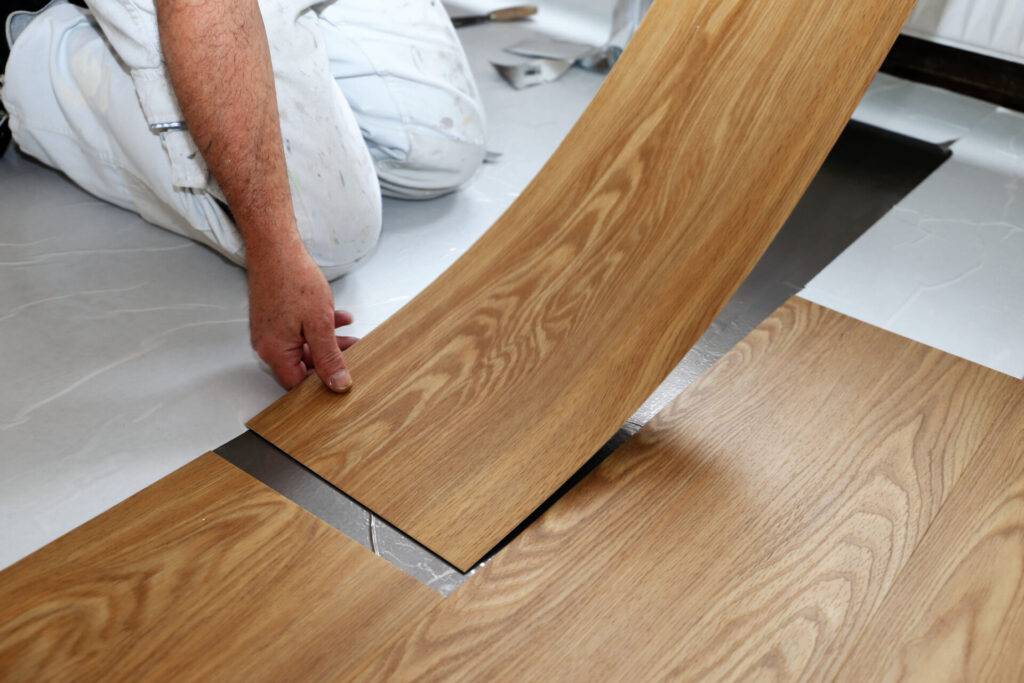
Installation costs also depend on the selected format. Individual tiles may require careful alignment, adhesive application, and precise cutting around walls, corners, and fixtures.
Herringbone, diagonal, and other decorative patterns generally require more cutting and installation time than straightforward layouts.
Cost of Vinyl Flooring and Installation
The total cost of vinyl flooring and installation includes more than the price of the flooring material.
A complete project may involve purchasing the flooring, preparing the subfloor, removing existing materials, installing the new surface, and fitting finishing accessories.
For USA properties, professional installation commonly adds approximately $1–$10 per square foot, although the actual rate depends on the flooring type and local labour market.
For UK properties, fitting charges may be calculated per square metre or as a daily labour rate.
The following table illustrates how project size can influence the estimated material and installation budget for luxury vinyl plank flooring in the USA.
| Floor area | Estimated material and installation cost |
|---|---|
| 100 sq. ft. | $600–$2,000 |
| 200 sq. ft. | $1,200–$4,000 |
| 300 sq. ft. | $1,800–$6,000 |
| 500 sq. ft. | $3,000–$10,000 |
| 1,000 sq. ft. | $6,000–$20,000 |
| 1,500 sq. ft. | $9,000–$30,000 |
These are broad estimates based on indicative LVP material and installation rates. They exclude unusual subfloor repairs, extensive demolition, and other specialist work.
Factors That Affect Vinyl Flooring Cost
Several factors influence the final flooring budget. Even when two properties require the same floor area, their installation costs may differ because of the condition of the building and the selected flooring specifications.
1. Quality and Thickness of Flooring
Vinyl flooring is manufactured in different thicknesses and quality grades.
Budget products may have thinner construction and simpler surface finishes, while higher-grade products may offer more detailed designs, improved dimensional stability, and thicker protective wear layers.
The wear layer is particularly important because it protects the decorative surface against everyday abrasion.
Homeowners should compare technical specifications rather than selecting flooring based only on its overall thickness or appearance.
2. Installation Method
The installation method affects both labour requirements and total project costs.
Click-lock vinyl flooring: These planks connect through an interlocking mechanism and generally create a floating floor. They are commonly used in residential projects because installation can be relatively straightforward.
Glue-down vinyl flooring: Adhesive is used to secure each plank or tile to the prepared subfloor. This method requires suitable adhesive, surface preparation, and careful installation.
Peel-and-stick vinyl flooring: These products have an adhesive backing and are generally available at lower material prices. However, the subfloor must be sufficiently smooth, clean, and suitable for the adhesive.
Loose-lay vinyl flooring: Some products are designed to remain in position through their weight, friction, or perimeter fixing. Installation requirements vary by manufacturer.
3. Subfloor Preparation
Subfloor preparation is an essential part of vinyl flooring installation.
The existing surface should be clean, dry, level, and structurally suitable for the selected flooring product.
Concrete subfloors may require grinding, patching, or levelling. Wooden subfloors may need repairs to loose boards, damaged panels, or uneven sections.
Moisture testing may also be necessary, particularly when installing flooring over concrete slabs.
If the subfloor is uneven or contains cracks and surface defects, additional preparation can increase the overall installation cost.
4. Removal of Existing Flooring
Removing old carpet, vinyl, laminate, tiles, or hardwood can add to the project budget.
Some click-lock vinyl products may be installed over certain existing flooring surfaces, provided the manufacturer permits it and the underlying floor meets flatness and stability requirements.
However, damaged, loose, uneven, or unsuitable materials generally need to be removed.
Older flooring can require specialist assessment before removal. In particular, some pre-1980s flooring materials and adhesives may contain asbestos. Suspected asbestos-containing materials should be tested and handled by appropriately qualified professionals.
5. Room Shape and Installation Complexity
Simple rectangular rooms generally require less cutting and fitting than spaces with multiple corners, doorways, built-in cabinets, or irregular dimensions.
Staircases, narrow hallways, curved edges, and decorative installation patterns can increase labour requirements.
Herringbone and chevron patterns also require more detailed measurements and cutting than standard straight-plank layouts.
6. Additional Materials and Accessories
A vinyl flooring project may require additional components, depending on the selected product and room conditions.
Common accessories include:
- Underlayment.
- Moisture barriers.
- Flooring adhesives.
- Skirting boards.
- Transition strips.
- Stair nosings.
- Expansion spacers.
- Floor levelling compounds.
Some luxury vinyl products have attached underlayment, while others require a separate compatible product. Installing an unapproved underlayment can affect the stability or warranty of certain click-lock systems.
Discount Flooring and Cheap Vinyl Carpet Alternatives
Homeowners working with a limited renovation budget often compare discount flooring options before making a purchase.
Budget-friendly vinyl flooring is available in sheet, tile, and plank formats. Sheet vinyl is generally one of the least expensive choices because it is supplied in large rolls and can cover substantial areas with relatively few seams.
The term cheap vinyl carpet is sometimes used when searching for affordable soft-looking or carpet-style flooring alternatives. However, vinyl flooring and traditional carpet are different products.
Vinyl is a resilient flooring material, while carpet generally contains textile fibres attached to a backing.
For buyers comparing inexpensive flooring options, the main considerations include:
- Initial purchase price.
- Surface durability.
- Installation requirements.
- Cleaning and maintenance.
- Moisture resistance.
- Expected traffic levels.
- Product warranty.
Discounted flooring can represent good value when the product meets the property’s requirements. However, homeowners should check the product grade, wear layer, manufacturing details, and availability of replacement planks or tiles.
Vinyl Flooring Cost by Room
The intended installation area can influence the selected material and total budget.
Kitchen Flooring
Kitchens experience regular foot traffic, food spills, and frequent cleaning. Luxury vinyl plank and tile products are often selected because they provide practical surfaces with wood and stone-style finishes.
Bathroom Flooring
Bathrooms require flooring suitable for moisture exposure. Waterproof vinyl products can be appropriate, but installation details around toilets, baths, showers, and wall edges remain important.
The subfloor and room waterproofing requirements should also be assessed.
Bedroom Flooring
Bedrooms generally experience less demanding traffic than kitchens and hallways. Standard vinyl planks and budget-friendly luxury vinyl products may be suitable depending on comfort and design preferences.
Basement Flooring
Basements can experience moisture vapour transmission and water-related problems.
Although many vinyl products are marketed as waterproof, this does not mean they prevent groundwater from entering a basement or protect the underlying structure from moisture damage.
The concrete slab should be assessed before installation, and any water penetration issues should be addressed separately.
Vinyl Flooring Compared with Other Flooring Materials
Vinyl flooring is frequently compared with laminate, hardwood, ceramic tiles, and carpet.
| Flooring type | Main characteristics | General cost position |
|---|---|---|
| Vinyl flooring | Flexible designs, practical cleaning, moisture-resistant options | Low to moderate |
| Laminate flooring | Wood-style appearance and rigid construction | Low to moderate |
| Hardwood | Natural timber appearance and refinishing potential | Moderate to high |
| Ceramic tiles | Hard surface, moisture resistance, multiple designs | Moderate to high |
| Carpet | Soft underfoot and available in textile finishes | Low to moderate |
The best option depends on the room, moisture conditions, expected foot traffic, maintenance preferences, and available budget.
Vinyl flooring can be a practical alternative to natural wood and stone, but it may not provide the same repair or refinishing possibilities as some traditional materials.
Maintenance and Long-Term Flooring Costs
Vinyl flooring generally requires routine cleaning rather than specialised maintenance.
Regular sweeping or vacuuming helps remove dirt and abrasive particles that can affect the surface finish.
Damp mopping with a manufacturer-approved cleaning product can help maintain the floor’s appearance.
Heavy furniture should be fitted with suitable protective pads to reduce indentation and surface damage.
Other maintenance considerations include:
- Cleaning spills promptly.
- Avoiding abrasive cleaning tools.
- Using compatible floor-cleaning products.
- Protecting flooring from dragging heavy objects.
- Inspecting seams and edges periodically.
- Following manufacturer recommendations for direct sunlight and temperature exposure.
The long-term cost also depends on product quality, installation conditions, maintenance practices, and replacement requirements.
Conclusion
The vinyl flooring cost per sq ft depends on the selected flooring type, material quality, installation method, labour charges, and condition of the existing subfloor.
Basic sheet vinyl and standard vinyl tiles generally provide more affordable flooring options, while luxury vinyl plank and luxury vinyl tile products offer additional design choices and different construction specifications.
For homeowners in the USA and UK, understanding the difference between material prices and complete installation costs is essential when planning a flooring project.
A realistic estimate should include flooring materials, labour, surface preparation, old flooring removal, underlayment, adhesives, and finishing accessories where required.
By evaluating these elements together, property owners can compare flooring options more effectively and select a surface that meets their budget, design preferences, and everyday requirements.
Frequently Asked Questions
1. How much does vinyl flooring cost per square foot?
Basic vinyl sheet materials may cost approximately $1–$2 per square foot in the USA, while luxury vinyl plank materials commonly range from $3–$10 per square foot. Installation and preparation are additional expenses.
2. What is the cost of vinyl flooring and installation?
The total installed cost depends on the product and labour requirements. Luxury vinyl plank projects may cost approximately $6–$20 per square foot using broad material and installation estimates.
3. Is luxury vinyl plank flooring more expensive than standard vinyl?
Yes, luxury vinyl plank generally costs more because of its construction, decorative finishes, and product specifications. However, prices vary between manufacturers and product ranges.
4. What is the cheapest type of vinyl flooring?
Sheet vinyl is generally one of the most affordable vinyl flooring options. Peel-and-stick vinyl tiles can also have low initial material prices, although installation suitability and durability should be considered.
5. How much does LVP flooring installation cost?
In the USA, luxury vinyl plank installation labour can commonly range from approximately $3–$10 per square foot. Material costs are separate and depend on product quality.
6. Is vinyl flooring suitable for kitchens and bathrooms?
Waterproof vinyl products can be suitable for kitchens and bathrooms. However, correct installation, sealed edges, suitable subfloor conditions, and manufacturer recommendations remain important.
7. Does vinyl flooring require underlayment?
Not every vinyl product requires separate underlayment. Some products include an attached backing, while others need a compatible underlayment or adhesive system. The manufacturer’s installation instructions should always be followed.