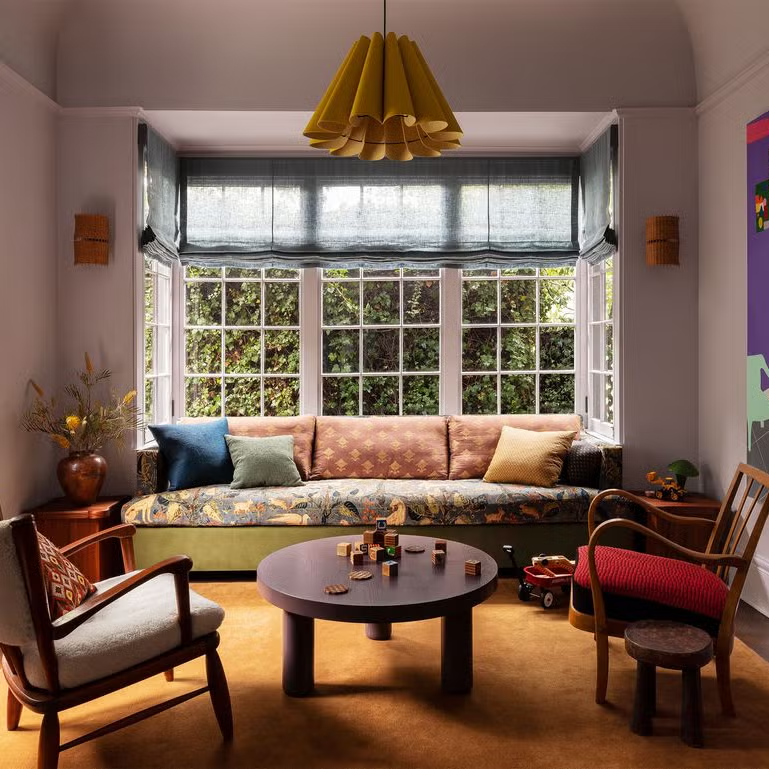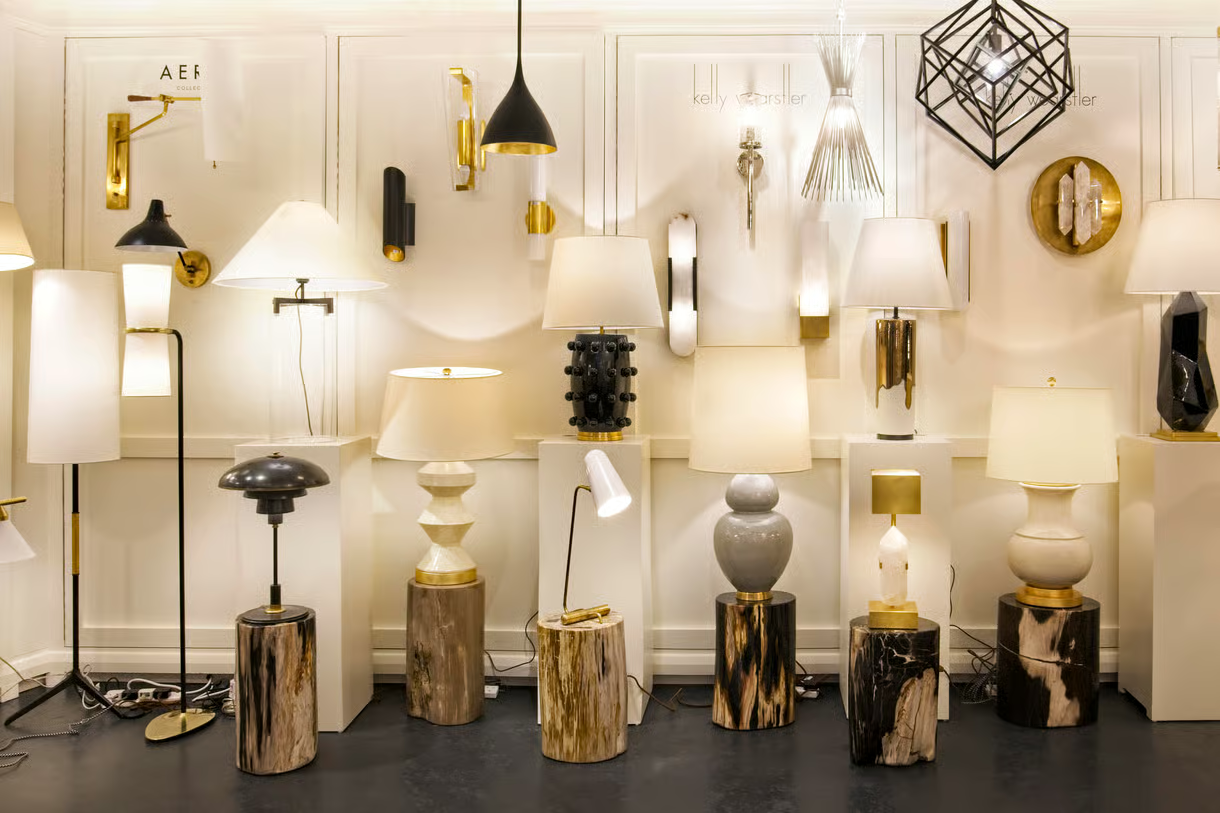
A game room can be one of the most flexible spaces in a home. It can be designed around video games, board games, billiards, table tennis, darts, card games, or a combination of different activities. In homes across the USA and UK, dedicated entertainment rooms are also becoming useful spaces for social gatherings, family activities, and relaxed evenings.
The best game room ideas are not necessarily the most complicated. A well-planned room can combine comfortable seating, suitable lighting, practical storage, entertainment equipment, and a clear layout without becoming overcrowded.
A modern gaming room may focus on a desktop computer, multiple monitors, and immersive lighting, while a traditional game room may revolve around a pool table, foosball table, or classic arcade machine. The available space, household interests, and architecture of the home should determine the final design.
What Makes a Good Game Room?
A successful game room balances entertainment with everyday comfort. The room needs enough open space for the activities being planned while still leaving room for people to move around.
The first consideration is usually the primary activity. A billiards room requires considerably more floor clearance than a console gaming setup. Similarly, table tennis requires a large playing area, while board games can work on a relatively small table.
Furniture should support the way the room is used. A gaming chair may be appropriate for a computer station, while a sectional sofa can accommodate several people watching a game or playing console games.
Storage is another important part of game room design. Controllers, board games, cables, cards, accessories, and other equipment can quickly create clutter if everything does not have a designated location.
Game Room Design for Different Spaces
A game room does not have to occupy an entire large room. Spare bedrooms, basements, lofts, converted garages, family rooms, and sections of open-plan living areas can all work.
Basements are particularly popular in American homes because they can provide substantial floor space away from the main living areas. They can accommodate larger equipment such as pool tables, arcade cabinets, home theaters, or multiple gaming stations.
In UK homes, where floor space can be more limited, a spare bedroom or loft conversion can become a compact entertainment room. Under-stair storage and built-in cabinets can help maximize available space.
A small room can concentrate on one or two activities rather than attempting to accommodate everything. This often produces a more functional layout.
Gaming Room Ideas for Video Game Players
A dedicated gaming room can be built around a PC, PlayStation, Xbox, Nintendo Switch, or a combination of platforms.
A PC gaming station usually requires a desk, monitor or multiple monitors, keyboard, mouse, speakers or headphones, and a comfortable chair. Cable management is particularly important because gaming setups can involve numerous power and data connections.
Console gaming may benefit more from a television positioned opposite a sofa or lounge chair. A wall-mounted display can save floor space, while a media console can provide storage for consoles and accessories.
For competitive gaming, screen position and seating height matter. The display should be positioned comfortably to reduce unnecessary neck movement during extended sessions.
Game Room Decor Ideas
Game room decor can reflect the interests of the people using the space without making the room feel like a collection of unrelated objects.
Wall art based on favorite games, sports, films, or hobbies can provide personality. Framed artwork, posters, shelves, and display cases can be arranged around a central theme.
For a more mature interior, decorative choices can be subtle. Instead of covering every wall with gaming graphics, a room might use neutral walls with a few carefully selected pieces.
Classic gaming references can also create a distinctive atmosphere. Characters and franchises from Nintendo, Sony PlayStation, Xbox, Sega, Atari, and other gaming companies may inspire artwork or collectibles.
The room does not need to use branded decoration to communicate its purpose. Color, lighting, furniture, and equipment can establish a gaming-focused atmosphere on their own.
Game Room Decorating Ideas for Adults
Game room ideas for adults can take a more sophisticated approach. The room can combine gaming with social entertainment, music, drinks, sports viewing, or traditional games.
A pool table can act as the centerpiece of the room, with comfortable seating arranged around it. A bar-style counter or compact drinks station may provide additional functionality where appropriate.
Leather or fabric lounge chairs, wood finishes, darker neutral colors, framed artwork, and architectural lighting can create a more mature appearance.
Board games and card games can also be central to an adult game room. A substantial dining-style table can serve multiple purposes, allowing people to play chess, poker, strategy games, or tabletop role-playing games.
Gamer Room Ideas With a Clean Appearance
A gamer room can become visually busy because of multiple screens, cables, accessories, and lighting devices. A clean design can make the space feel more comfortable.
Cable trays beneath desks can keep wires organized. Power strips can be mounted or concealed where appropriate, while cable sleeves can group multiple cords together.
Floating shelves can display collectibles without taking up floor space. Closed cabinets can hide equipment that is not used regularly.
A limited color palette can also help. Black, white, gray, natural wood, and muted colors provide a neutral foundation that allows screens and artwork to become focal points.
Lighting in a Gaming Room
Lighting has a significant influence on a gaming environment. The room should have enough general illumination for safe movement and everyday use, while task lighting can be focused around desks and tables.
LED lighting is widely used in gaming rooms because it can provide adjustable brightness and color. However, decorative lighting should not replace practical illumination.
Backlighting behind a monitor or television can create a softer visual transition between the bright screen and the darker room. This may also reduce the feeling of having a very bright screen surrounded by complete darkness.
Ceiling fixtures, wall sconces, floor lamps, and table lamps can be combined to create several layers of illumination.
Natural light should also be considered. Blackout curtains or blinds may be useful for rooms where glare affects screen visibility.
Home Game Room Ideas With a Pool Table
A pool table can immediately establish the character of a traditional home game room, but it requires substantial space.
Players need enough clearance around the table to use a cue comfortably. Furniture should therefore be positioned outside the main playing area.
Pool tables come in different sizes, including common seven-, eight-, and nine-foot formats. The appropriate size depends on the room dimensions and the amount of clearance available.
A pool table can be paired with wall-mounted cue storage, a scoreboard, seating, and overhead lighting. The lighting fixture should provide even illumination over the playing surface without obstructing players.
Table Tennis and Foosball
Table tennis can be an energetic addition to a larger game room. A full-size table requires considerable open space around it, so the room should be measured carefully before installation.
Foosball tables need less clearance than table tennis tables but still require space for players on both sides.
These activities work particularly well in basements, garages, recreational rooms, and large family spaces.
For smaller homes, a foldable table can provide flexibility. It can be stored against a wall when the room is needed for another activity.
Board Game Room Ideas
Board games can create a social game room without requiring large electronic equipment.
A central table with comfortable chairs can serve as the main feature. Storage shelves can hold board games, card games, puzzles, dice, miniatures, and accessories.
For serious tabletop gaming, a larger table can provide enough room for game boards, player areas, cards, and accessories. Some dedicated gaming tables also include recessed playing surfaces and storage compartments.
Games such as Monopoly, Catan, Ticket to Ride, Carcassonne, chess, and modern tabletop role-playing games can all influence the type of storage and table required.
A combination of open shelving and closed cabinets can keep frequently used games accessible while keeping the rest of the room visually organized.
Arcade Game Room Ideas
An arcade-inspired room can draw inspiration from classic gaming culture. Full-size arcade cabinets can become strong visual features, but they require adequate floor and electrical space.
Modern machines can reproduce classic arcade experiences while occupying less space than multiple original cabinets.
A room does not need dozens of machines to achieve an arcade atmosphere. One or two cabinets, appropriate wall art, comfortable seating, and focused lighting may be enough.
For collectors, shelving or glass-front cabinets can display smaller memorabilia, cartridges, controllers, and other gaming objects.
Comfortable Seating
Seating should match the number of people expected to use the room.
A sectional sofa works well for console gaming, sports viewing, and movie nights. Individual gaming chairs may be better suited to PC stations.
Beanbags and floor cushions can provide flexible seating in casual rooms, while armchairs can create a more traditional entertainment environment.
The seating should not block doors, windows, ventilation points, or access to equipment.
If several screens are being used, seating should be arranged so that viewers have a clear line of sight without having to turn their heads excessively.
Storage for a Game Room
Storage helps maintain a functional game room.
Shelving can hold board games and collectibles, while drawers can store controllers, cables, batteries, cards, and smaller accessories.
Built-in cabinetry can be especially useful in rooms where visual clutter needs to be minimized. Cabinets can conceal consoles and equipment when they are not being used.
Pegboards can also provide flexible storage for controllers, headphones, and gaming accessories. They can be mounted above a desk or workstation where appropriate.
A dedicated charging station can keep wireless controllers and portable devices together rather than scattered around the room.
Sound and Acoustics
Gaming rooms can become noisy, particularly when several people are playing together. Basements and rooms away from bedrooms can therefore be practical locations.
Soft furnishings such as rugs, curtains, upholstered furniture, and acoustic panels can reduce sound reflections. They can also make the room feel warmer and more comfortable.
Hard surfaces tend to reflect sound, while soft materials absorb some of it. A balanced combination can improve the overall acoustic environment without requiring a professional recording-studio setup.
For homes with shared walls, volume levels and room placement should be considered to reduce disturbance.
Small Game Room Ideas
A compact room can still provide a strong gaming experience.
A wall-mounted television, compact sofa, narrow storage unit, and small gaming console setup can make efficient use of limited floor space.
For PC gaming, a corner desk can maximize the usable area. Wall shelves can provide storage without reducing floor clearance.
Multi-purpose furniture can also be useful. An ottoman with internal storage can function as seating and equipment storage, while a foldable table can support board games when needed.
The most important principle for a small room is avoiding unnecessary furniture. Every item should have a clear purpose.
Modern Game Room Design
Modern game room design ideas often combine entertainment technology with a restrained interior.
A minimalist desk, concealed cables, built-in storage, neutral walls, and carefully positioned lighting can produce a clean appearance. Technology remains visible but is integrated into the room rather than dominating every surface.
A contemporary game room can also incorporate natural materials. Wood shelving, textured fabrics, rugs, and plants can soften the appearance of multiple screens and electronic equipment.
Smart lighting systems can provide different settings for gaming, watching films, reading, or socializing.
Creating a Flexible Entertainment Room
A game room does not have to be dedicated to one activity. A flexible room can combine gaming, television, music, board games, and social activities.
A central seating area can support console gaming and movie watching, while a separate table can be used for cards or board games. Shelving can accommodate both games and decorative objects.
In larger rooms, rugs or furniture arrangements can visually divide different zones without constructing permanent walls.
This approach can be particularly useful for families. Children may use the room for video games and tabletop activities, while adults can use the same space for sports viewing or social gatherings.
Game Rooms in USA and UK Homes
Home layouts influence how recreational rooms are designed.
In the USA, finished basements are common locations for large entertainment areas. Larger suburban properties may also have dedicated recreation rooms containing billiards, arcade machines, home theaters, and gaming stations.
In the UK, loft rooms, spare bedrooms, converted garages, and compact living spaces can serve similar purposes. Because available floor area can be more limited in many properties, furniture scale and storage become particularly important.
Climate also affects room placement. A well-insulated indoor space provides more consistent year-round conditions for electronics, furniture, and gaming equipment.
A Balanced Game Room Interior
The strongest game room ideas combine function, comfort, and personal character. The room should make the main activities easy to enjoy without becoming difficult to maintain.
A thoughtful game room design can begin with one central activity and gradually incorporate supporting features such as seating, storage, lighting, acoustic treatment, and decoration.
Whether the room centers on a gaming PC, a PlayStation or Xbox setup, a pool table, board games, arcade machines, or several activities, the same principles apply: provide enough space, organize equipment, manage lighting, and choose furniture that suits the people using the room.
A carefully planned game room can therefore become more than a place for games. It can function as a social room, family entertainment area, hobby space, or quiet retreat while remaining connected to the wider character of the home.