Long before sewing machines could produce a buttonhole in seconds, tailors and home sewers relied entirely on hand needlework to create secure, durable closures for garments. Despite decades of mechanized alternatives, the hand sewn buttonhole has never disappeared from the sewing world. It remains a valued technique among tailors, costume makers, heirloom sewists, and anyone working on garments where precision, durability, or a couture finish matters more than speed.
This article explores the buttonhole stitch in detail, walking through its history, its practical advantages, and a clear breakdown of how to sew a buttonhole by hand for those looking to add this skill to their sewing repertoire.
Understanding the Buttonhole Stitch
At its core, the buttonhole stitch, sometimes referred to interchangeably as the blanket stitch in related contexts, though the two differ in structure, is a looped hand stitch specifically designed to reinforce and finish a slit cut into fabric. Unlike a simple whip stitch or running stitch, the buttonhole hand stitch creates a dense, knotted edge along the opening, preventing fraying and giving the closure enough structural integrity to withstand repeated use.
This technique dates back centuries, long predating the invention of the sewing machine, and remains foundational in traditional tailoring education. Even today, high-end bespoke tailoring houses in the UK and custom garment makers throughout the US continue to rely on this hand technique, particularly for formalwear, outerwear, and garments intended to last for many years of wear.
Why Choose Hand Sewn Buttonholes Over Machine-Made Ones
While modern sewing machines can produce serviceable buttonholes quickly, hand sewn buttonholes offer several distinct advantages that continue to make them relevant, even in an era of automated stitching.
Durability and Strength
The looped structure of a properly executed buttonhole stitch creates a knot at each stitch, meaning that if one section of thread wears or breaks, the surrounding stitches remain intact rather than unraveling entirely. This makes hand-finished buttonholes notably more resistant to fraying and structural failure compared to many machine-stitched alternatives, particularly on garments subject to frequent use, such as coats, jackets, or tailored trousers.
Adaptability to Fabric and Fiber
Certain fabrics, particularly thick wool, heavy tweed, or fabrics with an open weave, can be challenging for a sewing machine to handle cleanly when creating a buttonhole. Hand stitching allows for greater control and adjustment as the sewer works, making it especially useful for tailoring projects involving substantial or unconventional fabric weights.
Aesthetic and Custom Finish
Hand-worked buttonholes often carry a distinctive, slightly raised, textured appearance that many sewers and tailors consider more refined than the flatter finish typical of machine-stitched buttonholes. This aesthetic quality has made hand sewing a hallmark of couture and bespoke garment construction, where visible stitching quality contributes meaningfully to the perceived value and craftsmanship of the finished piece.
Suitability for Special Occasions
For formalwear, particularly items such as wedding attire, hand-finished details often carry additional significance. Learning how to make a buttonhole for wedding garments, whether for a bespoke suit, a bridal accessory, or a boutonniere loop, allows for a level of customization and finishing quality that complements the overall craftsmanship expected of such garments.
Tools and Materials Needed
Before beginning, gathering the appropriate tools helps ensure a clean, professional result. A sharp pair of small embroidery or buttonhole scissors is essential for cutting a precise slit without fraying the surrounding fabric. Buttonhole twist thread, a slightly heavier, more durable thread specifically designed for this purpose, is generally preferred over standard sewing thread, as it provides better structural support and a more defined stitch appearance.
A fine, sharp hand-sewing needle, sized appropriately for the fabric weight, along with a thimble to protect the fingers during repeated stitching, rounds out the basic toolkit. Some sewers also use a small amount of fabric interfacing or reinforcement stitching around the intended buttonhole area before cutting, particularly on lighter-weight or loosely woven fabrics, to add stability before the stitching process begins.
Step-by-Step: How to Hand Stitch a Buttonhole
Marking and Preparing the Fabric
The process begins with accurately marking the buttonhole’s placement and length on the fabric, typically corresponding to the diameter of the button plus a small allowance for ease of fastening. Many sewers reinforce this area beforehand with a line of small running stitches or machine stitching around the marked outline, which helps stabilize the fabric before cutting and provides a guide for the subsequent hand stitching.
Cutting the Slit
Using sharp scissors, a precise cut is made along the marked line. This step requires care, as an uneven or overly large cut can be difficult to fully correct with stitching alone. Some tailors use a stiletto or awl to create a small, round opening at one end of the buttonhole, known as the “eye,” which allows the button shank room to sit without placing excessive strain on the surrounding stitching.
Working the Buttonhole Stitch
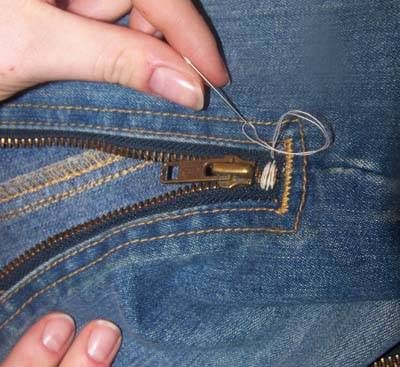
The actual stitching begins at one end of the cut slit. The needle is passed through the fabric from the back to the front, close to the cut edge, and before pulling the thread completely through, it is looped under the needle’s point, creating a small knot that sits directly along the cut edge once tightened. This process is repeated stitch by stitch along the entire length of the opening, with consistent spacing and tension being key to achieving a neat, even finished appearance.
At the rounded eye end of the buttonhole, stitches are typically worked in a fan-like pattern to accommodate the curved shape, while the straight end is usually finished with a small bar tack, a series of horizontal stitches that reinforce the endpoint and prevent the buttonhole from stretching or tearing further during use.
Finishing and Securing
Once the stitching is complete along both edges, the working thread is secured with a few small stitches on the reverse side of the fabric before being trimmed. Some sewers lightly press the finished buttonhole with an iron, using a pressing cloth to protect the stitching, which helps set the stitches and gives the buttonhole a crisp, finished appearance.
Common Challenges and Tips for Success
Learning how to sew a buttonhole by hand often involves a learning curve, particularly around maintaining consistent stitch tension and spacing. Stitches that are too loose can leave the buttonhole prone to fraying or stretching, while overly tight stitches can pucker the surrounding fabric, distorting the overall shape of the closure.
Practicing on scrap fabric before attempting a buttonhole on an actual garment allows sewers to build muscle memory and confidence in the motion before committing to a finished project. Working slowly and maintaining even spacing between stitches, generally aiming for consistency rather than speed, tends to produce a more polished, professional-looking result over time.
Selecting an appropriately sized needle and thread for the specific fabric weight also plays a significant role in achieving clean results. Using thread that is too thick for a delicate fabric can distort the material, while overly thin thread on heavier fabric may fail to provide adequate durability for the finished buttonhole.
Applications Beyond Traditional Garments
While hand sewn buttonholes are most commonly associated with tailored jackets, coats, and formal trousers, the technique has broader applications throughout garment construction and costume design. Historical reenactment and costume work frequently require this hand technique to achieve period-accurate construction methods, since many historical garments predate the availability of buttonhole-capable sewing machines entirely.
Bridal and formalwear construction also frequently incorporates hand-finished buttonholes, both for their durability in garments meant to be treasured or preserved, and for the refined aesthetic they contribute to already detail-oriented formal attire. Even smaller-scale applications, such as boutonniere loops or decorative closures on handmade accessories, can benefit from this same fundamental stitching technique.
Preserving a Traditional Skill
As mass-produced clothing and machine stitching have become the default in most contemporary garment production, the hand sewn buttonhole represents one of several traditional sewing techniques that continue to be preserved through tailoring schools, costume departments, and dedicated hobbyist sewing communities throughout the United States and United Kingdom. Organizations and educational programs focused on historical costuming, bespoke tailoring, and heirloom sewing techniques continue to teach and promote this skill, ensuring it remains accessible to future generations of sewers interested in traditional garment construction methods.
For many practitioners, the appeal extends beyond mere function. The meditative, repetitive nature of hand stitching offers a tactile, focused alternative to machine sewing, appealing to those who value the process of garment making as much as the finished result.
Variations in Thread and Technique
Not all hand sewn buttonholes are created using identical materials or exact stitch counts, and some variation exists depending on regional tailoring traditions and the specific demands of a given garment. British tailoring conventions, for instance, often favor a slightly denser stitch count for added durability on heavier wool suiting, while lighter garments may call for a finer thread and more delicate spacing to avoid overwhelming the fabric. Silk buttonhole twist offers a subtle sheen suited to formalwear, while cotton or linen-based threads are often chosen for more casual or historical garment reproductions where a matte finish is preferred.
Some sewers also incorporate a technique known as a “gimp” thread, a slightly thicker core thread laid along the edge of the buttonhole before stitching begins, which the buttonhole stitch is then worked over. This additional layer provides extra reinforcement and a firmer, more defined edge, particularly useful for garments expected to endure frequent fastening and unfastening over their lifespan, such as tailored jackets or outerwear.
Caring for Garments with Hand Finished Buttonholes
Once completed, garments featuring hand sewn buttonholes generally require the same general care as the surrounding fabric, though a few additional considerations can help preserve the stitching over time. Avoiding excessive strain when fastening or unfastening buttons, particularly on delicate or vintage fabrics, helps prevent unnecessary stress on the reinforced edges. Periodically inspecting the stitching for any signs of loosening, especially on frequently used garments, allows for small repairs before more significant unraveling occurs.
For treasured or heirloom garments, such as wedding attire intended for preservation, storing the item away from excessive humidity and direct sunlight helps protect both the fabric and the integrity of the hand stitching for years to come.
Final Thoughts
The hand sewn buttonhole, though often overshadowed by faster machine alternatives in everyday garment construction, remains a valuable and enduring technique within the broader craft of sewing. Its durability, adaptability to challenging fabrics, and refined aesthetic continue to make it a preferred choice for tailoring, formalwear, and historical or heirloom sewing projects throughout the United States and United Kingdom.
For sewers willing to invest the time in learning this hand stitch, the resulting skill offers both practical benefits for garment longevity and a deeper connection to the traditional craftsmanship that has shaped clothing construction for centuries.