Laundry spaces have changed significantly in recent years, particularly in homes where space efficiency is a priority. Across the UK and USA, stacking washer and dryer units are increasingly common in apartments, townhouses, and compact homes. These appliances are designed to offer full laundry functionality while occupying a smaller footprint than traditional side-by-side machines.
Table of Contents
ToggleAs housing layouts evolve, interest in the best stacking washer and dryer combinations continues to grow. Rather than focusing on brand promotion, understanding how stackable systems work, how they are rated, and how they fit into different living environments helps homeowners make informed decisions.
This article explores best rated stacking washer dryer options from a functional perspective, explaining design principles, performance expectations, and suitability for residential use.
What Is a Stackable Washer and Dryer System
A stackable washer dryer setup consists of a washing machine and dryer designed to be placed vertically, one on top of the other. Typically, the washer is installed at the bottom, with the dryer secured above it using a manufacturer-approved stacking kit.
Unlike all-in-one units, a stacking washer and dryer system keeps washing and drying functions separate. This separation often results in better performance, greater load flexibility, and easier maintenance.
Stackable units are available in both full-size and compact formats, making them suitable for a wide range of property types.
Why Stackable Washing Machines Are Widely Used
The popularity of the stackable washing machine comes from its ability to deliver capacity without sacrificing space. In urban areas where utility rooms are smaller or non-existent, stacking appliances allows laundry facilities to fit into closets, hallways, or kitchen-adjacent spaces.
Common reasons homeowners choose stackable systems include:
-
Limited floor space
-
Vertical storage opportunities
-
Modern apartment layouts
-
Need for full-size washing performance
These factors apply equally to properties in major US cities and UK urban developments.
Understanding Best Rated Stackable Washer and Dryer Criteria
When discussing the best rated stackable washer and dryer, ratings usually reflect performance, efficiency, durability, and user experience rather than appearance or brand reputation alone.
Key evaluation factors include:
-
Washing and drying efficiency
-
Energy and water consumption
-
Noise and vibration control
-
Reliability over time
Ratings often come from consumer testing, long-term usage data, and appliance performance standards rather than marketing claims.
Electric Stackable Washer and Dryer Systems
An electric stackable washer and dryer is the most common configuration found in residential settings. Electric dryers are generally easier to install than gas models and are widely supported in both UK and US homes.
Electric stackable dryers:
-
Require a dedicated electrical circuit
-
Do not need a gas line
-
Are compatible with most modern laundry spaces
This makes them particularly suitable for apartments, rental properties, and condominiums.
Space Planning for Stacking Washer and Dryer Units
Before choosing a stacking washer and dryer, accurate space planning is essential. While stacking saves floor area, vertical clearance becomes critical.
Typical space considerations include:
-
Ceiling height clearance (usually 66–79 inches)
-
Ventilation requirements
-
Door swing and access clearance
Proper planning ensures safe operation and long-term usability.
Best Stackable Washer Dryer Combo vs Separate Units
The best stackable washer dryer combo refers to a single machine that washes and dries in one unit. While convenient, combo units differ significantly from stacked pairs.
Combo Units
-
Use one drum for both washing and drying
-
Typically have smaller load capacities
-
May take longer to complete cycles
Stacked Washer and Dryer Sets
-
Allow washing and drying simultaneously
-
Offer better performance for larger households
-
Provide more flexibility in laundry scheduling
For many homes, stacked separate units provide a better balance of efficiency and convenience.
Typical Load Capacity and Household Suitability
Stackable washers and dryers come in varying capacities. Compact units are often used in smaller households, while full-size stackable models support family use.
Capacity considerations include:
-
2.0–2.5 cu. ft. washers for small households
-
4.0–5.0 cu. ft. washers for families
-
Matching dryer capacity for balanced performance
Choosing the correct size improves efficiency and reduces wear on appliances.
Installation Considerations for Stackable Systems
Installation requirements for dryer stackable washer systems depend on model type and location.
Key installation factors:
-
Structural support for stacked weight
-
Approved stacking kits
-
Electrical and venting access
Improper installation can affect performance and safety, making professional installation a common recommendation.
Stackable Washer and Dryer Noise Levels
Noise control is an important consideration, especially in apartments and shared buildings. Modern best stacking washer and dryer units are designed with vibration reduction and sound insulation features.
Factors affecting noise include:
-
Spin speed
-
Load balance
-
Flooring type
Choosing models with vibration control technology improves comfort in living spaces.
Energy Efficiency and Utility Costs
Energy efficiency is a key factor in evaluating the best rated stacking washer dryer systems. Many modern units meet or exceed efficiency standards in both the UK and USA.
Efficient systems typically:
-
Use less water per cycle
-
Adjust energy use based on load size
-
Reduce long-term utility costs
Energy-efficient appliances support sustainability goals without compromising performance.
Stackable Washing Machines in Apartments
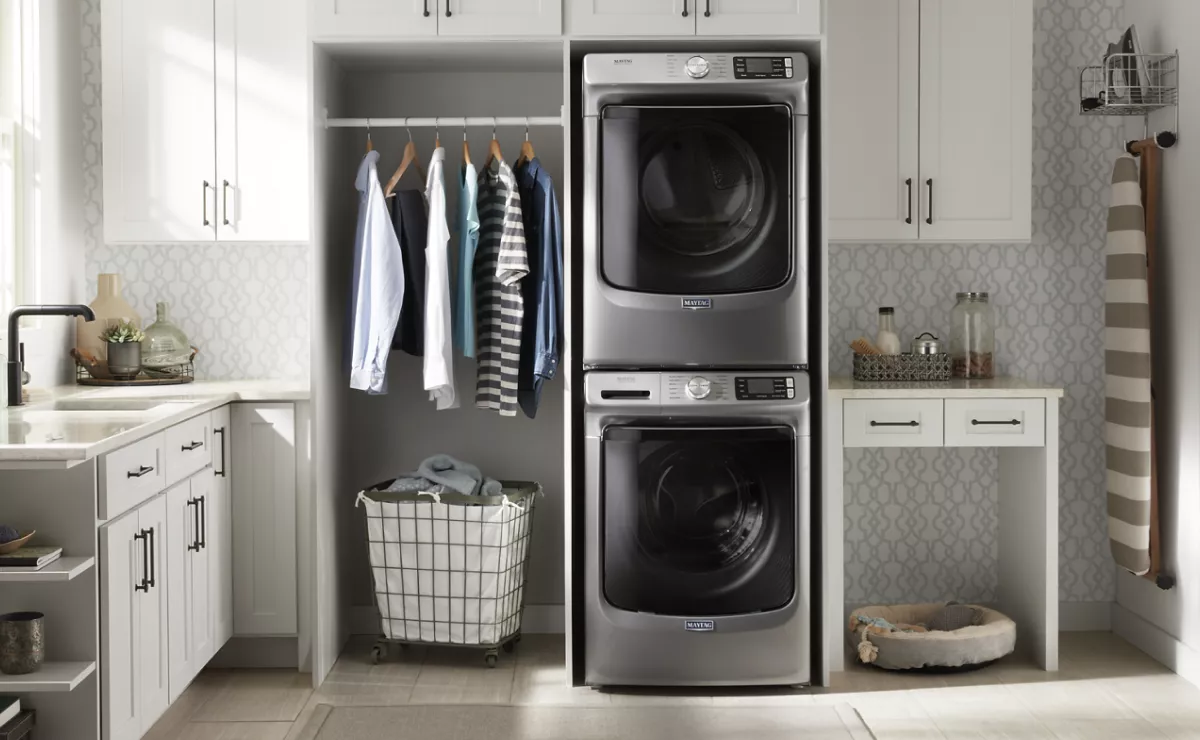


Apartments often present unique challenges, including limited space, noise sensitivity, and installation restrictions. Stackable washing machines are well-suited to these environments due to their compact design and adaptability.
In many apartment developments, stackable units are installed in:
-
Hallway closets
-
Bathroom alcoves
-
Kitchen-adjacent cabinets
Their flexibility makes them a practical choice for high-density housing.
Best Stackable Washer and Dryer for Small Homes
Small homes and townhouses benefit from vertical appliance layouts. The best stacking washer and dryer options for these spaces balance size with capacity.
Key advantages include:
-
Preserved living space
-
Reduced need for dedicated laundry rooms
-
Improved home layout efficiency
These benefits apply equally to new builds and renovations.
Retail Availability and Distribution Channels
Stackable washer and dryer systems are widely available through major appliance retailers. In the USA, retailers such as Lowe’s offer a wide selection of stackable units suitable for residential use.
In the UK, similar availability exists through national appliance retailers and specialist suppliers. Retail availability ensures access to installation services, warranties, and replacement parts.
Durability and Long-Term Reliability
Durability is a major factor in identifying the best rated stackable washer and dryer systems. Machines designed for stacking often feature reinforced frames and improved drum suspension.
Long-term reliability depends on:
-
Build quality
-
Proper installation
-
Regular maintenance
Stackable units used within recommended capacity limits tend to perform reliably over many years.
Maintenance Requirements
Maintenance needs for stacking washer and dryer units are similar to standard appliances but may require additional attention due to vertical placement.
Maintenance considerations include:
-
Lint trap cleaning
-
Vent inspection
-
Periodic leveling checks
Easy access to controls and service panels supports routine upkeep.
Stackable Washer and Dryer Safety Considerations
Safety is a critical aspect of stacking appliances. Manufacturer-approved stacking kits ensure secure attachment and weight distribution.
Safety best practices include:
-
Never stacking incompatible models
-
Ensuring adequate ventilation
-
Avoiding overloading
Following these principles supports safe, long-term use.
Electric Stackable Washer and Dryer in Shared Housing
In shared housing or multi-family dwellings, electric stackable washer and dryer systems offer predictable performance and simplified utility management.
Electric dryers eliminate concerns related to gas lines and ventilation complexity, making them suitable for a wide range of property types.
Environmental Considerations
Modern stackable appliances are designed with environmental performance in mind. Reduced water consumption, improved energy efficiency, and longer product lifespans contribute to lower environmental impact.
Choosing efficient appliances aligns with sustainability goals increasingly prioritised in both UK and US housing markets.
Stackable Washer and Dryer vs Side-by-Side Units
While side-by-side units remain popular in larger homes, stackable systems offer advantages where space is limited.
Comparison highlights:
-
Stackable units save floor space
-
Side-by-side units may offer easier access
-
Performance is comparable when capacity is matched
The choice depends largely on available space and household needs.
Design Integration in Modern Interiors
Stackable washer and dryer systems are increasingly integrated into interior design rather than hidden away. Custom cabinetry and built-in closets allow these appliances to blend seamlessly into living spaces.
This integration supports clean, modern aesthetics without compromising function.
Adaptability and Future Use
One advantage of stacked systems is adaptability. Units can often be unstacked and relocated if living arrangements change.
This flexibility makes best stacking washer and dryer setups suitable for renters and homeowners alike.
Performance Expectations in Daily Use
In everyday use, stackable washer and dryer systems provide consistent performance comparable to traditional layouts. With appropriate load sizes and proper care, users can expect reliable cleaning and drying results.
Performance consistency is a major reason these systems receive strong user ratings.
Conclusion
The growing use of stacking washer and dryer systems reflects changing residential needs in the UK and USA. By offering efficient use of space, reliable performance, and modern design compatibility, stackable appliances meet the demands of contemporary living.
Understanding the characteristics that define the best rated stacking washer dryer, including efficiency, durability, and installation requirements, allows homeowners to select systems that support both practical needs and long-term household comfort.