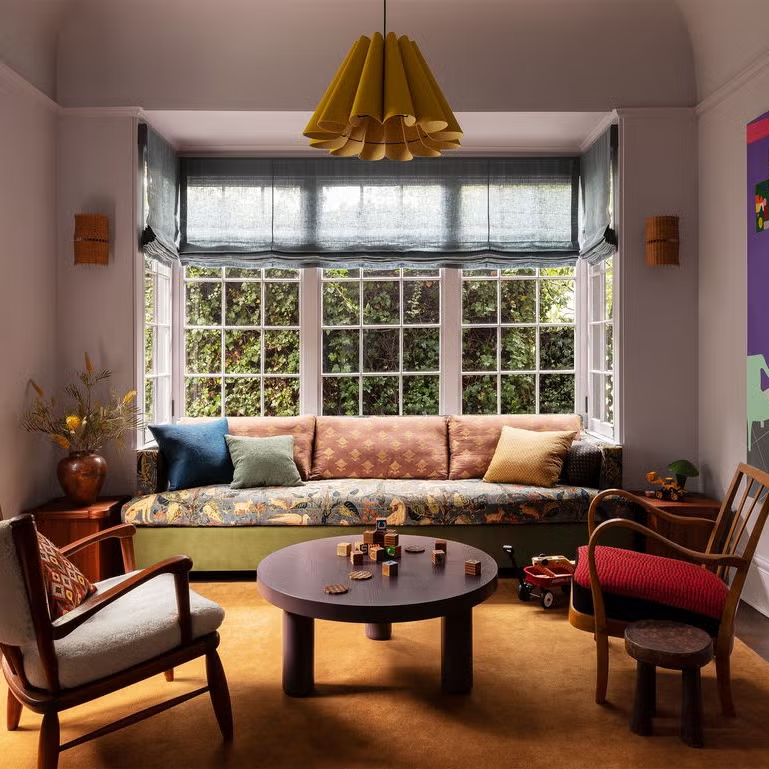
The styles of houses we see today are shaped by history, climate, materials, technology, and the way people live. A house is more than just a place to stay—it reflects culture, local building traditions, and even economic changes. When you walk through a neighbourhood, you can often “read” time and history simply by looking at the rooflines, windows, brickwork, and layout. A street filled with Victorian terraces tells a different story than an area of modern detached homes with large glass openings.
In the UK and the USA, house styles are especially varied. Many UK towns have centuries-old homes standing alongside newer estates. In the USA, you may see colonial-era influences in one region, ranch homes across another, and sleek contemporary designs in newer developments. Some house designs are built for colder weather, others are designed to stay cool, and some are created mainly for appearance and lifestyle trends.
People search for different house styles for many reasons. Some want inspiration for a new build. Others want to identify a house style they already live in. Many people are planning renovations and want to know what designs suit their property. And some are simply curious about the style of home builds throughout history—how homes moved from small, practical spaces to the open-plan, light-filled designs many people prefer today.
This article explores different styles of houses in a clear and easy way, focusing on the UK and USA. You’ll learn the most common house styles, what defines them, how they developed, and why they still matter in modern housing.
What Does “House Style” Mean?
A house style usually refers to the overall architectural design of a home. It includes the visible features and the general building approach, such as:
-
Shape and structure (compact, long, tall, symmetrical, etc.)
-
Roof type (gable, hip, flat, mansard)
-
Window design (sash, bay windows, large panes)
-
Exterior materials (brick, stone, wood siding, stucco)
-
Decorative details (mouldings, columns, trim, arches)
-
Floor plan (open plan, compartmentalised rooms, split-level design)
House styles are influenced by:
-
Historical periods
-
Local building rules and traditions
-
Climate and geography
-
Available materials
-
Technology and construction methods
A single house can sometimes include features from multiple styles. For example, a home may have a modern layout but use a traditional exterior design for a classic appearance.
Why House Styles Matter in the UK and USA
Different styles of houses aren’t just aesthetic choices. They influence how a home functions.
1) Practical Use and Daily Comfort
A cottage-style home may feel cosy but might have smaller rooms. A modern house may have more light and open spaces but can feel less private.
2) Energy Efficiency and Weather Suitability
-
Thick brick or stone walls help older homes hold heat
-
Large windows and open layouts work best with good insulation
-
Roof shape can affect drainage and snow load
3) Resale Value and Local Appeal
In many markets, house style affects buyer interest. Some areas strongly prefer traditional designs, while others value modern architecture.
4) Renovation and Extension Options
Understanding your house style helps you choose updates that look balanced and consistent. For instance:
-
A Victorian home extension may need careful proportions
-
A ranch home might suit a wider rear addition
-
A mid-century modern house may look best with clean lines
Styles of Houses in the UK: Classic Designs That Still Shape Neighbourhoods
The UK has a rich architectural history, and many common house styles are tied to specific time periods. You’ll also notice strong differences between England, Scotland, Wales, and Northern Ireland due to local materials and regional design traditions.
1) Tudor-Style Houses
Tudor design is one of the most recognisable traditional styles in the UK. True Tudor buildings date back centuries, but many “Tudor-style” homes were built later in a revival trend.
Key features:
-
Steep pitched roofs
-
Decorative timber framing (often black and white)
-
Tall chimneys
-
Small-pane windows
-
Overhanging upper floors in some older examples
Tudor-style houses feel historic and character-rich, and they are often associated with villages, heritage streets, and period homes.
2) Georgian Houses
Georgian houses are known for their balance, symmetry, and formal design. Many Georgian homes were built during the 18th century, and the style remains highly admired.
Key features:
-
Symmetrical front façade
-
Sash windows aligned in rows
-
Brick or stone exteriors
-
Decorative doorway surrounds
-
Elegant proportions
Georgian homes often feel refined and spacious, especially in towns with large terraces or country homes.
3) Victorian Houses
Victorian architecture expanded rapidly during the 19th century as industrialisation increased wealth and building capacity. Many UK cities still have large areas of Victorian terraces.
Key features:
-
Bay windows
-
Decorative brickwork
-
Tall ceilings
-
Fireplaces (often in multiple rooms)
-
Narrow but deep layouts in terraced homes
-
Ornamental details and trim
Victorian houses can feel charming and spacious, but they may require updates for insulation, heating, and modern living needs.
4) Edwardian Houses
Edwardian houses came after the Victorian period and often feel brighter and more open.
Key features:
-
Larger rooms compared to many Victorian terraces
-
Wider hallways
-
Big windows
-
Decorative but lighter detailing
-
Front gardens and more spacing in many areas
Edwardian homes are often seen as a balance between classic charm and improved layouts.
5) Terraced Houses
Terraced houses are a major part of UK housing. They are built in continuous rows, sharing side walls.
Key features:
-
Narrower width
-
Shared walls on both sides (mid-terrace)
-
Efficient use of space
-
Often built near town centres
Terraced houses are common in Victorian and Edwardian neighbourhoods, but terraced building continues in modern developments too.
6) Semi-Detached Houses
A semi-detached house is attached to one neighbouring home on one side.
Key features:
-
More privacy than a terrace
-
Side access (often)
-
Usually includes front and back gardens
-
Popular in suburban UK layouts
Semi-detached homes are considered one of the most common house types in the UK, especially in post-war estates.
7) Detached Houses
Detached homes stand alone and do not share walls with neighbours.
Key features:
-
Most privacy
-
Typically larger plot
-
Flexible extension options
-
Often found in suburban or rural settings
Detached houses exist in older rural areas as well as modern developments.
8) Cottages
Cottages are usually smaller homes associated with rural life, traditional materials, and cosy interiors.
Key features:
-
Stone or brick exterior
-
Low ceilings in older builds
-
Smaller rooms
-
Traditional fireplaces
-
Compact windows in some historic cottages
Modern cottage-style houses may copy the exterior charm while improving insulation and room layout.
Styles of Houses in the USA: Regional Variety and Changing Lifestyles
The USA has a wide range of architectural styles because of migration, regional climate, and fast-growing suburban development over the last century.
1) Colonial-Style Houses
Colonial homes are among the most well-known traditional American styles. They are inspired by early European settlers and later revival movements.
Key features:
-
Symmetrical design
-
Central front door
-
Shuttered windows
-
Brick or wood siding
-
Balanced proportions
Colonial-style houses often feel formal and traditional, especially in older East Coast neighbourhoods.
2) Cape Cod Houses
Cape Cod homes are compact and practical, originally designed for coastal climates.
Key features:
-
Steep roof
-
Dormer windows
-
Symmetrical front
-
Central chimney in many older versions
-
Simple exterior design
Cape Cod homes are popular because they look classic and fit smaller lots well.
3) Ranch-Style Houses
Ranch houses became extremely popular in mid-20th century suburban expansion.
Key features:
-
Single-storey layout (or one main level)
-
Long, low profile
-
Attached garage in many designs
-
Large windows and sliding doors
-
Easy indoor-outdoor flow
Ranch-style homes are common in many US states and are valued for accessibility and simple living.
4) Craftsman-Style Houses
Craftsman homes are admired for their detail, warmth, and natural materials. They became popular in the early 1900s.
Key features:
-
Low-pitched roofs with wide eaves
-
Front porches with thick columns
-
Exposed beams and wood detailing
-
Built-in cabinetry in many original interiors
-
Strong, grounded look
Craftsman homes feel welcoming and solid, often with high-quality details.
5) Farmhouse Style
Farmhouse design has both traditional and modern versions. The modern farmhouse trend became especially popular in recent years, but classic farmhouses have existed for generations.
Key features (traditional):
-
Practical layout
-
Simple shapes
-
Often wood siding
-
Porches and functional outdoor spaces
Modern farmhouse influences may include:
-
Cleaner lines
-
Larger open-plan interiors
-
Neutral colour palettes
-
Metal roofing accents (in some designs)
Farmhouse style is popular because it combines comfort and simplicity.
6) Mid-Century Modern Homes
Mid-century modern architecture gained popularity after World War II. It is known for simplicity, large glass areas, and clean geometry.
Key features:
-
Flat or low-pitched roofs
-
Large windows
-
Open-plan living spaces
-
Connection to nature
-
Minimal decorative trim
Mid-century modern remains influential in contemporary home design.
7) Contemporary Houses
Contemporary homes focus on current trends and modern construction methods. They can vary widely, but they usually feature simplicity and light.
Key features:
-
Large windows
-
Open interior layouts
-
Mixed materials (glass, metal, wood, concrete)
-
Simple rooflines or flat roofs
-
Minimal exterior ornamentation
Contemporary houses are common in new developments and custom builds.
Different Style Homes by Structure and Layout
Not all “house styles” are historical. Some are defined by how the home is built and arranged.
1) Bungalows
In both the UK and USA, bungalows are usually one-storey homes (or one main level). They are known for convenience and accessibility.
Key features:
-
Single-floor living
-
Wide frontage
-
Often includes a porch or larger roof overhang
Bungalows are popular for downsizers and families who prefer fewer stairs.
2) Townhouses
Townhouses are multi-level homes that share side walls with neighbouring properties.
Key features:
-
Tall, narrow layout
-
Efficient use of land
-
Often found in cities or high-demand suburbs
Townhouses can be modern or historic depending on location.
3) Split-Level Homes
Split-level homes became popular in the USA during suburban growth periods.
Key features:
-
Different floor levels separated by short staircases
-
Distinct zones for living, sleeping, and recreation
-
Efficient use of sloped lots
Split-level designs can feel practical for families but may not appeal to those wanting open, continuous floors.
4) Duplexes and Multi-Family Homes
A duplex is one building divided into two separate living units. Multi-family homes include apartments and larger shared buildings.
These styles are often found in:
-
Urban areas
-
Rental investment properties
-
Mixed-use neighbourhoods
Style of Home Builds Throughout History (Simple Timeline)
To understand types of house styles, it helps to see how living patterns changed over time.
Older Homes: Function and Local Materials
Many historic homes were built with:
-
Locally available stone, brick, or timber
-
Smaller windows due to glass limitations
-
Fireplaces as heating sources
-
More separated rooms for warmth and privacy
Industrial Revolution and Mass Housing Growth
In the UK, industrial growth increased:
-
Terraced housing
-
Dense town development
-
More standardised building sizes
In the USA, population growth created:
-
Expanding town layouts
-
Larger homes for growing families
-
Regional style differences
Post-War Homes and Suburban Expansion
After World War II, both countries saw:
-
Faster construction methods
-
New neighbourhood planning
-
More cars leading to garages and driveways
-
Layouts built for modern family life
This era created ranch homes in the USA and many suburban estates in the UK.
Modern Homes: Open Plan and Light
Many modern homes focus on:
-
Open-plan kitchen and living spaces
-
Large glazing for natural light
-
Better insulation and energy efficiency
-
Flexible multi-purpose rooms (home office spaces)
Common House Styles Today in the UK and USA
While historic styles remain popular, many current builds follow practical modern formats. Some of the most common modern-day house styles include:
-
Contemporary detached homes
-
Modern townhouses
-
New-build semi-detached properties
-
Renovated period homes with extensions
-
Open-plan family houses
In the UK, new builds often combine traditional exterior elements with modern internal layouts. In the USA, new builds often feature larger footprints, attached garages, and open-plan interiors.
Exterior Features That Help Identify House Styles
If you want to recognise a house style quickly, here are key details to watch:
Roof Shape
-
Gable roof (classic triangle shape)
-
Hip roof (slopes on all sides)
-
Flat roof (common in modern homes)
-
Mansard roof (extra living space in the roof area)
Window Design
-
Bay windows (often Victorian or Edwardian)
-
Sash windows (common in Georgian and UK period homes)
-
Large picture windows (mid-century modern)
Building Materials
-
Brick (common in UK, also many US areas)
-
Stone (traditional rural UK, some US regions)
-
Wood siding (common in USA)
-
Stucco (common in warmer climates)
Decorative Details
-
Porches (Craftsman, farmhouse, colonial styles)
-
Columns (colonial, Georgian influences)
-
Trim and moulding (Victorian, traditional homes)
Interiors and Floor Plans: How They Changed With House Style
House style is not just outside. The interior often reflects its era and purpose.
Traditional Layouts
Older homes commonly have:
-
Separate dining rooms
-
Smaller kitchens
-
Hallways dividing rooms
-
Formal front rooms
Modern Layouts
Newer homes often include:
-
Open-plan kitchen/living area
-
Larger bathrooms
-
Built-in storage
-
Utility rooms or laundry areas
-
Flexible rooms for work-from-home life
In both the UK and USA, modern living has pushed designs toward:
-
More light
-
More connection between rooms
-
Better flow for families
Mixing House Styles: Old Meets New
One common trend is combining old and new. Many homeowners live in a traditional home style but renovate inside to match modern preferences.
Examples include:
-
Victorian terrace with a modern kitchen extension
-
Georgian home with updated bathrooms and insulation
-
Ranch home with open-plan conversion and modern finishes
-
Cottage-style exterior with contemporary windows and layout
When done well, this blend keeps character while improving comfort.
Choosing a House Style That Matches Lifestyle
Different style homes suit different priorities. A few simple examples:
-
If you value privacy and space, detached homes and larger plots are often preferred.
-
If you prefer low maintenance, modern builds with efficient materials can help.
-
If you love character, period homes like Victorian, Edwardian, Georgian, and Tudor-inspired designs stand out.
-
If you want easy accessibility, bungalows and ranch homes are practical.
-
If you want urban convenience, townhouses and terraces often fit city living better.
House style is often a balance between appearance, practicality, budget, and location.
Conclusion: Styles of Houses Reflect Time, Place, and the Way We Live
The styles of houses in the UK and USA tell a story about how people have lived throughout history. From Georgian symmetry and Victorian detail in the UK, to Colonial balance and Ranch-style practicality in the USA, each house style carries a unique identity. Some styles were shaped by the materials available at the time, others by changing family needs, and many by evolving design trends.
Today, homeowners and builders continue to borrow from the past while using modern features like open-plan layouts, bigger windows, and improved energy efficiency. Whether you prefer classic charm or clean contemporary lines, learning about different styles of houses makes it easier to understand the homes around you—and to choose a style that fits your needs if you ever build, buy, or renovate.
House style is not just architecture. It’s comfort, function, and a reflection of lifestyle. And as the way we live continues to change, house design will continue to change with it.