In residential construction across the United States, framing a window is a critical part of building a safe, functional, and energy-efficient home. Proper window framing ensures that the window is securely supported, that the surrounding wall maintains its structural integrity, and that the building is insulated against weather and temperature changes. For builders, contractors, and even DIY enthusiasts, understanding the principles of framing for a window, including the role of a window header, is essential.
Many people ask questions like what is a window header, how to frame in a window, or what is window header framing. These concepts are not just construction jargon—they are foundational elements that affect both the safety and the performance of a building. In this article, we will explore the components, methods, and technical considerations of window framing, including diagrams, terminology, and practical applications.
What Is Window Framing?


Window framing refers to the process of constructing the wooden or metal framework that surrounds and supports a window opening in a wall. It involves precise placement of structural elements to create an opening that can accommodate the window unit while maintaining the load-bearing capacity of the wall.
The framing typically involves:
-
Studs – vertical supports in the wall
-
Window headers – horizontal beams above the window
-
Sill plates – horizontal support at the bottom of the window
-
Cripples – shorter vertical studs above or below the window header
-
King studs – full-length vertical studs at the sides of the window
Each of these components works together to support the window and transfer weight safely to the foundation.
The Role of a Window Header
The window header is one of the most critical elements in window framing. It is a horizontal structural beam installed above the window opening to carry the load of the wall and roof above the window.
Why a Header Is Important
-
Supports the weight of the structure above the window
-
Prevents sagging or bowing of the wall
-
Maintains proper alignment for the window installation
-
Helps distribute vertical loads to the side studs
Headers can be made from solid lumber, engineered wood (such as laminated veneer lumber, LVL), or steel for larger openings. The size of the header depends on the width of the window and the load it must carry.
Components of Window Framing
Understanding framing for a window requires knowing the key parts of a window frame.
King Studs
King studs are vertical studs that run from the bottom plate to the top plate of the wall. They are placed on either side of the window opening and carry the weight from the top plate down to the foundation.
Trimmer or Jack Studs
Trimmer studs, also called jack studs, are shorter studs installed next to the king studs. They support the ends of the window header.
Window Sill
The sill is the bottom horizontal member of the window frame. It provides a base for the window and transfers some of the load from the window to the trimmer studs.
Cripple Studs
Cripple studs are short vertical studs placed above or below the window opening. They provide support for wall sheathing and drywall while maintaining the structural integrity of the wall.
Header
As mentioned, the header spans the top of the window and is supported by trimmer studs. It must be sized correctly to support roof loads, wall loads, and any additional loads such as snow on a roof.
Common Window Header Types
There are several types of window headers used in residential construction:
-
Solid Lumber Header – Made from dimensional lumber like 2×6, 2×8, or 2×10 boards. Suitable for small to medium-sized window openings.
-
Engineered Lumber Header (LVL) – Made from laminated veneer lumber. Provides increased strength for wider openings without sagging.
-
Boxed Header – Consists of two pieces of lumber separated by a spacer. Less common but used in certain framing situations.
-
Steel Header – For extra-large openings or walls carrying heavy structural loads.
Choosing the correct header depends on window size, wall load, and local building codes.
How to Frame a Window
Framing a window involves precise measurements and structural planning. The general steps include:
-
Mark the Window Opening – Measure and mark the window location on the wall studs. Include space for the header, sill, and rough opening.
-
Cut Studs for Opening – Remove a section of the wall studs where the window will go, leaving the king studs intact.
-
Install Trimmer Studs – Place shorter studs on each side to support the window header.
-
Install Header – Fit the header over the trimmer studs. Ensure it is level and flush with the wall.
-
Add Cripple Studs – Place cripple studs above the header and/or below the sill to maintain wall strength.
-
Install Sill Plate – Fit the sill plate at the bottom of the opening.
-
Check Level and Square – Ensure the rough opening is level and square before installing the window unit.
A precise window framing diagram is often used to visualize these steps and ensure proper placement of all components.
Window Framing Diagram
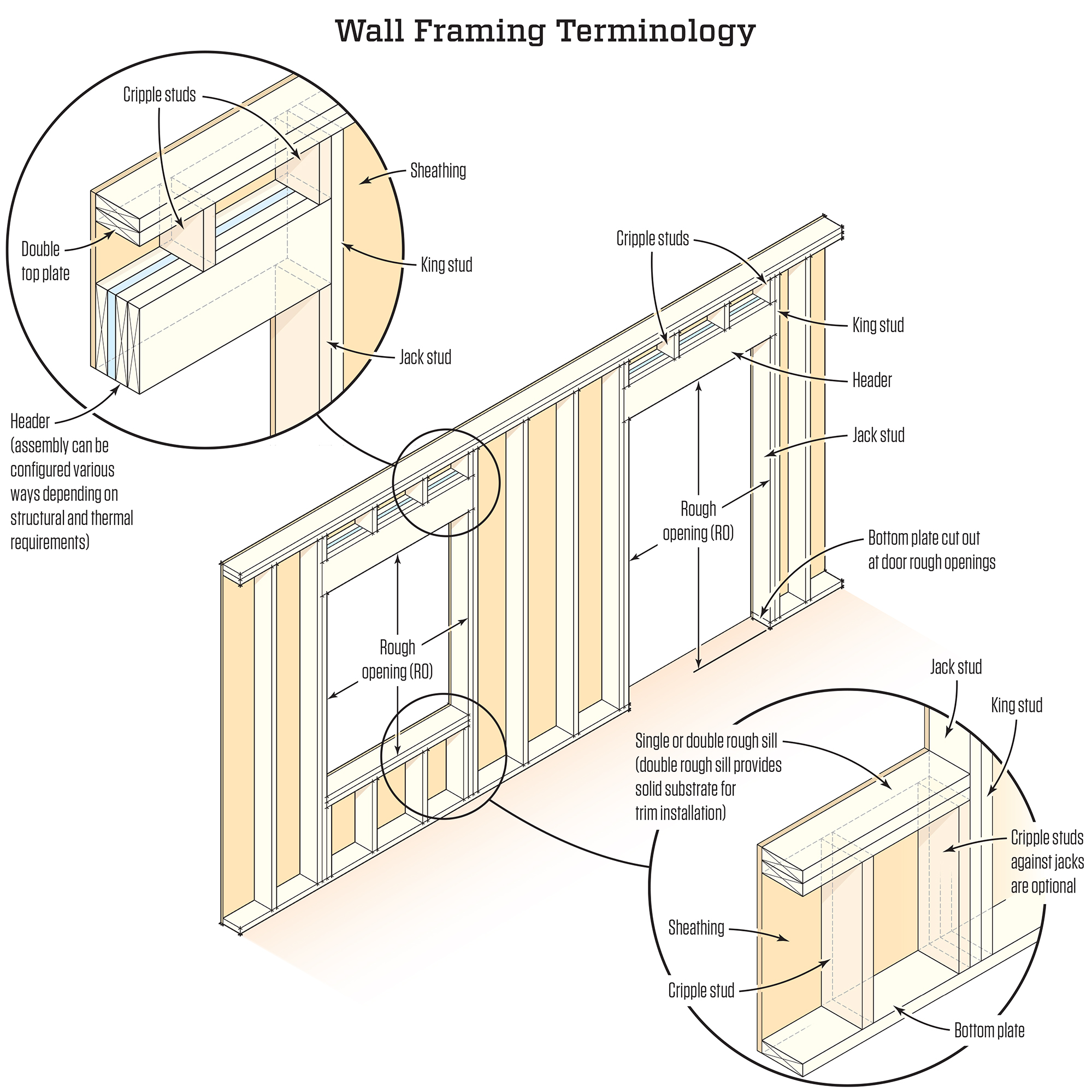
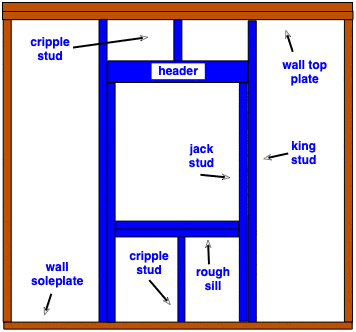
A typical diagram for window framing shows:
-
The king studs on each side of the window
-
The trimmer/jack studs supporting the header
-
The header spanning the opening
-
Cripple studs above and below the window
-
The sill plate at the bottom of the opening
Visualizing the components helps ensure that the window is correctly framed and structurally supported.
Rough Opening Size
The rough opening is the framed space where the window will be installed. It is slightly larger than the window unit to allow for shimming, insulation, and proper sealing.
-
Width: Window width + 1/2 inch to 3/4 inch
-
Height: Window height + 1/2 inch to 3/4 inch
Proper rough opening size is critical to ensure the window fits correctly and can be leveled and squared during installation.
Framing in a Window vs. Installing the Window
Framing in a window refers to constructing the supporting structure, while installing the window is the process of fitting the window unit into the framed opening. Both steps require attention to detail:
-
Ensure the rough opening is level and square
-
Check that all studs, header, and sill are plumb
-
Verify that the header can support the expected load
Errors in framing can cause windows to stick, leak, or fail over time.
Window Header Framing and Load-Bearing Walls
A window header in a load-bearing wall must carry the weight of the structure above it, including:
-
Roof and ceiling joists
-
Upper floors
-
Attic space
-
Snow loads (in colder regions)
Building codes often specify the minimum size of headers based on span and load. In larger openings, engineered headers such as LVL beams are preferred for strength and stability.
Common Mistakes in Window Framing
Framing windows may seem straightforward, but mistakes can compromise safety and performance. Common errors include:
-
Undersized headers
-
Improperly spaced studs
-
Rough openings that are not square
-
Not leveling the sill plate
-
Ignoring local building codes
Attention to detail and proper planning are critical to successful window framing.
Tools and Materials for Window Framing
Constructing window openings requires a set of tools and materials:
Tools
-
Measuring tape
-
Level and square
-
Circular saw or handsaw
-
Hammer or nail gun
-
Chalk line
Materials
-
Dimensional lumber (2×4, 2×6, or engineered lumber)
-
Nails or screws
-
Shims (for adjusting window fit)
-
Wood or metal header beams
Using the right tools and materials ensures accurate and durable framing.
Energy Efficiency Considerations
Proper window framing also contributes to energy efficiency. A well-framed window:
-
Reduces air leaks
-
Allows proper insulation around the window
-
Supports installation of energy-efficient windows
-
Prevents water infiltration and drafts
Building codes and modern construction practices often require sealing and insulating around window frames to improve energy performance.
Professional vs. DIY Window Framing
While experienced DIYers may frame windows, many homeowners choose professional builders for structural and safety reasons. Licensed contractors follow:
-
Local building codes
-
NEC and IRC (International Residential Code) standards
-
Manufacturer recommendations for window installation
Hiring professionals can reduce mistakes and ensure proper load support, especially in load-bearing walls or for large window openings.
Framing Large or Multiple Windows
When framing larger windows or a series of windows:
-
Headers may need to be doubled or reinforced with engineered lumber
-
Additional trimmer studs support wider openings
-
Careful load distribution prevents sagging or wall distortion
These considerations are especially important in multi-story homes or buildings with heavy roof loads.
Conclusion
Proper window framing is essential for structural integrity, safety, and energy efficiency in residential construction. Understanding window headers, king and trimmer studs, sills, and cripple studs is crucial for builders, contractors, and homeowners who want durable, properly installed windows.
From framing a window in a load-bearing wall to visualizing a window framing diagram, attention to detail ensures that windows are correctly supported and aligned. Whether constructing a single-family home or replacing existing windows, effective window header framing provides the foundation for long-lasting, functional, and energy-efficient windows.
Proper planning, adherence to building codes, and knowledge of window framing components make all the difference between a secure, professional installation and a project that may lead to structural problems over time.