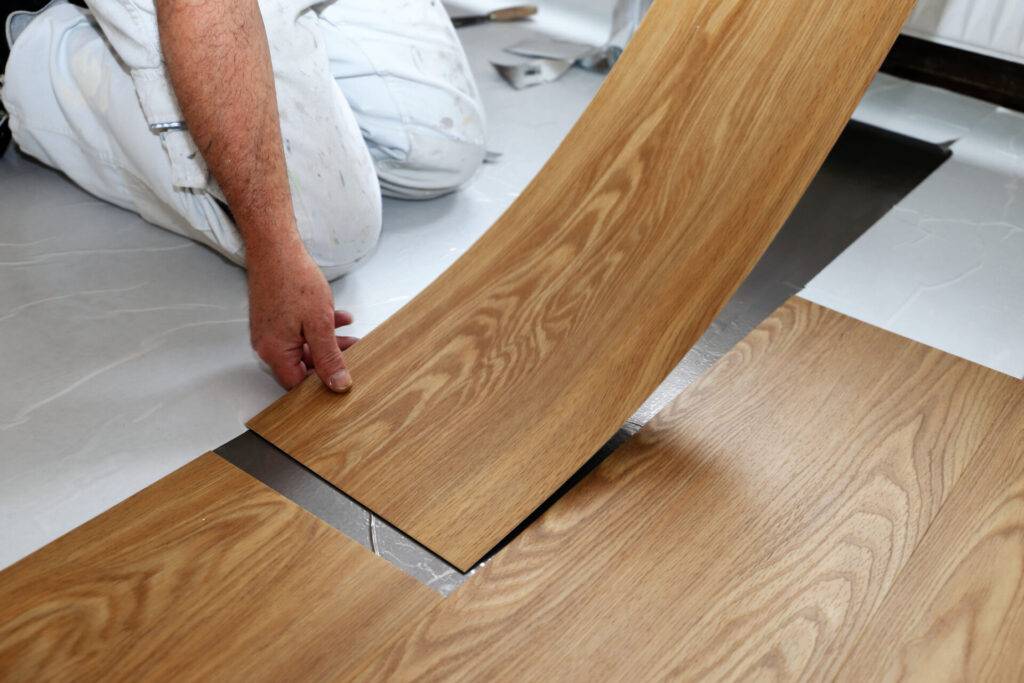
The term linear foot appears often in construction, flooring, countertops, lumber, fencing, cabinetry, landscaping, and home improvement. Although the measurement sounds complicated, a linear foot is simply a measurement of length.
Table of Contents
ToggleUnderstanding the linear feet meaning is useful when buying materials sold by length rather than by area. A countertop supplier may quote a price per linear foot, while a flooring company may work in square feet. Lumber may be listed by linear feet, board feet, or individual pieces depending on the product.
The terms lineal, lineal feet, and linear feet are also commonly used in similar contexts. However, a linear foot should not be confused with a square foot because they measure different things.
This distinction becomes especially important when estimating material quantities. Knowing how to calculate linear feet can help homeowners, contractors, designers, and property managers make more accurate measurements and compare material requirements.
What Is a Linear Foot?
So, what is a linear foot?
A linear foot is simply one foot of length. It measures distance in one direction and does not account for width or thickness.
For example:
- 1 linear foot = 1 foot long
- 5 linear feet = 5 feet long
- 10 linear feet = 10 feet long
- 25 linear feet = 25 feet long
If a countertop is 10 feet long, it contains 10 linear feet regardless of whether it is 24 inches or 30 inches wide.
This is the key difference between linear measurements and area measurements.
A linear foot measures length, while a square foot measures surface area.
Linear Foot Definition
The simplest linear foot definition is:
A linear foot is a unit of length equal to 12 inches or one standard foot.
The word “linear” indicates that the measurement relates to a straight-line distance.
For example, imagine a wall that is 12 feet long. Its length is 12 linear feet.
If that wall is 8 feet high, its surface area is 96 square feet:
12 feet × 8 feet = 96 square feet
The wall therefore has 12 linear feet of length but 96 square feet of surface area.
This example shows why linear feet and square feet should not be treated as interchangeable measurements.
Linear Foot Meaning
The linear foot meaning is straightforward: it describes the amount of material measured along its length.
The width of the material is not included in the linear-foot measurement.
This is particularly useful when materials have a standard or predetermined width.
For example, if a supplier sells a roll of material that is 4 feet wide and charges by the linear foot, buying 6 linear feet means purchasing a section that is:
6 feet long × 4 feet wide
The linear measurement is 6 feet, while the resulting surface area is 24 square feet.
This pricing method is common because it allows suppliers to sell continuous materials by length.
Lineal and Linear: Are They the Same?
The terms lineal and linear can cause confusion.
In many construction, manufacturing, and commercial settings, lineal foot is used to mean the same thing as linear foot.
You may therefore see:
- Linear foot
- Linear feet
- Lineal foot
- Lineal feet
In ordinary material estimating, these terms generally refer to length measured in feet.
“Linear” is the more familiar mathematical and everyday term, while “lineal” is often used in industry-specific descriptions.
The exact product specification should always be checked when ordering materials because manufacturers may use measurement terms differently.
What Are Lineal Feet?
Lineal feet simply means multiple linear feet.
For example, if you have three pieces of trim measuring 4 feet, 7 feet, and 9 feet, the total is:
4 + 7 + 9 = 20 lineal feet
The total material length is therefore 20 linear feet.
The calculation is particularly useful for materials such as:
- Baseboards
- Crown molding
- Fencing
- Handrails
- Countertops
- Cabinet components
- Wall trim
- Gutters
- Electrical conduit
- Piping
- Landscaping edging
Whenever the material is installed along a length, lineal feet may be used to describe the total amount required.
How to Calculate Linear Feet
How to calculate linear feet depends on the shape and layout of the project.
For a simple straight section, measure the length in feet.
If the measurement is already in feet, the calculation is straightforward.
For example:
A wall is 18 feet long.
Linear feet = 18 feet
For several sections, add their lengths together.
Suppose a homeowner needs baseboard for three walls:
- Wall 1: 12 feet
- Wall 2: 15 feet
- Wall 3: 10 feet
The total is:
12 + 15 + 10 = 37 linear feet
If the material will be cut, waste should also be considered.
Determining Linear Feet
To determine linear feet, first identify the length of every section where the material will be installed.
Measure each section from one end to the other. Record the measurements in the same unit, preferably feet.
Then add them together.
For example, a fencing project has four sections:
- 25 feet
- 32 feet
- 18 feet
- 15 feet
The total length is:
25 + 32 + 18 + 15 = 90 linear feet
If additional material is needed for cuts, overlaps, joins, or mistakes, an appropriate allowance can be added to the total.
The amount of waste depends on the material and project design. It is better to calculate waste based on the actual cutting requirements rather than automatically adding a large percentage.
Linear Feet in Construction
The term is particularly common in construction.
Contractors may calculate linear feet of walls, framing, trim, fencing, piping, electrical conduit, or other materials.
For example, a contractor installing baseboards may calculate the total length of all applicable walls.
A fencing contractor may calculate the linear footage of the property boundary.
A countertop supplier may quote a price per linear foot, particularly when countertop depth is standardized or specified separately.
Because products vary, it is important to ask what width, depth, thickness, or other dimensions are included in a quoted price per linear foot.
Linear Feet for Flooring
Flooring is usually sold by the square foot, but certain flooring-related products may be measured by linear feet.
Trim, transition strips, baseboards, molding, and edging are often measured by length.
For example, if a room requires 42 linear feet of baseboard, a contractor may purchase slightly more than 42 feet to allow for cutting and waste.
The amount of flooring itself, however, would generally be calculated in square feet because flooring covers an area.
This illustrates why the correct measurement depends on the material being purchased.
Linear Feet for Countertops
Countertops are another common example of linear-foot pricing.
Suppose a countertop is 12 feet long and the supplier charges by linear foot.
The material requirement is:
12 linear feet
However, this number alone does not describe the total countertop area.
A countertop that is 12 feet long and 2 feet wide covers:
12 × 2 = 24 square feet
If the countertop is 12 feet long and 2.5 feet wide, it covers:
12 × 2.5 = 30 square feet
Therefore, anyone comparing countertop prices should confirm exactly what is included in the linear-foot rate.
Cutouts for sinks, backsplashes, edge profiles, installation, and other details may be priced separately.
Linear Feet for Fencing
Fencing is often estimated in linear feet.
If the perimeter of a property requires 180 feet of fencing, the project requires approximately 180 linear feet of fence.
The height of the fence does not change the linear-foot measurement.
For example:
- 180 feet long × 4 feet high = 180 linear feet
- 180 feet long × 6 feet high = 180 linear feet
Both fences have the same length, but the taller fence has more surface area and may require different materials and costs.
This is why a fencing estimate should include both the linear footage and the fence height.
How to Convert Linear Feet to Square Feet
A common question is how to convert linear feet to square feet.
There is no direct conversion without knowing the width of the material.
Linear feet measure length, while square feet measure area.
The basic formula is:
Square feet = linear feet × width in feet
For example, suppose you have 20 linear feet of material that is 2 feet wide.
20 × 2 = 40 square feet
So, 20 linear feet of 2-foot-wide material covers 40 square feet.
If the material is 12 inches wide, that is 1 foot wide:
20 × 1 = 20 square feet
If the material is 18 inches wide, convert the width to feet first:
18 inches ÷ 12 = 1.5 feet
Then:
20 × 1.5 = 30 square feet
Converting Linear Feet When Width Is in Inches
Many building materials have widths listed in inches rather than feet.
The formula can be adjusted:
Square feet = linear feet × width in inches ÷ 12
For example, suppose you have 30 linear feet of material that is 24 inches wide.
30 × 24 ÷ 12 = 60 square feet
Therefore, 30 linear feet of 24-inch-wide material equals 60 square feet of surface area.
This calculation is useful for sheet goods, fabric, countertops, flooring products, and other materials where the width is known.
Can You Convert Square Feet to Linear Feet?
Yes, but you need to know the material width.
The formula is:
Linear feet = square feet ÷ width in feet
For example, suppose you have 100 square feet of material that is 2 feet wide.
100 ÷ 2 = 50 linear feet
If the material is 1 foot wide:
100 ÷ 1 = 100 linear feet
This shows why square feet cannot be converted to linear feet using a single universal number.
The width of the material is essential.
Linear Feet vs Square Feet
The difference can be summarized simply.
| Measurement | What It Measures | Example |
|---|---|---|
| Linear foot | Length | 10 feet long |
| Square foot | Area | 10 ft × 5 ft = 50 sq ft |
| Cubic foot | Volume | 10 ft × 5 ft × 2 ft = 100 cu ft |
A linear foot has only one dimension: length.
A square foot has two dimensions: length and width.
A cubic foot has three dimensions: length, width, and height or depth.
Using the wrong measurement can result in incorrect material estimates.
Linear Feet and Material Waste
When determining linear feet for a project, the exact calculated amount may not be the amount you should order.
Materials often require cuts, joints, overlaps, or adjustments.
For example, if a project requires 48 linear feet of trim, purchasing exactly 48 feet may leave no room for damaged pieces or cutting errors.
The appropriate waste allowance depends on the material and project complexity.
Straight installations with few joints may require less additional material than projects involving many corners or complicated patterns.
Professionals often create a cutting plan to reduce unnecessary waste.
Common Mistakes When Measuring Linear Feet
Several simple mistakes can affect material estimates.
Confusing Length With Area
A wall that is 20 feet long is not automatically 20 square feet.
Its square footage depends on its height.
Forgetting Width
You cannot convert linear feet to square feet without knowing the width.
Mixing Units
Do not add measurements in feet and inches without converting them to a consistent unit first.
Ignoring Waste
The calculated linear footage may represent the theoretical requirement rather than the amount needed for purchasing.
Measuring Only One Section
For projects with several walls or sections, measure every applicable area and add the lengths together.
Linear Foot Measurement in the USA and UK
The linear foot is particularly common in the USA and is also used in some UK construction and trade contexts.
The UK generally uses the metric system for many official measurements, with millimeters and meters commonly used in construction. However, feet and inches remain familiar in certain trades, property descriptions, and older buildings.
In the USA, feet and inches are deeply integrated into residential construction and material specifications.
When working with suppliers or contractors, confirm which measurement system is being used before calculating quantities.
Final Thoughts on Linear Foot
A linear foot is simply one foot of length. The term is used extensively for materials that are measured along a single dimension, including trim, fencing, countertops, molding, piping, and other long products.
Understanding the linear foot meaning makes it easier to calculate material requirements and interpret supplier pricing.
To determine linear feet, measure the length of each required section and add the measurements together. To convert linear feet to square feet, you must also know the material width.
The basic formula is:
Square feet = linear feet × width in feet
For material widths given in inches:
Square feet = linear feet × width in inches ÷ 12
The terms lineal, lineal feet, and linear feet are often used interchangeably in practical construction and material discussions, although the exact terminology can vary by industry.
Once the distinction between length and area is clear, linear-foot calculations become relatively simple. The most important step is using the correct measurement for the material and accounting for its width, layout, cuts, and expected waste.