A properly functioning air conditioning system plays an important role in vehicle comfort, especially during hot summers across the United States. When the cooling system begins to blow warm air instead of cold air, one common cause may be low refrigerant levels. In such situations, many drivers explore solutions such as a car air conditioning recharge kit or a vehicle air conditioner recharge kit.
Automotive air conditioning systems depend on a specialized refrigerant that circulates through the system to remove heat from the cabin. Over time, small leaks, aging components, or system wear can cause refrigerant levels to drop. When this occurs, drivers may consider a car AC refrigerant recharge to restore cooling performance.
Understanding how automotive AC systems work and how refrigerant recharge kits function can help vehicle owners better maintain their cars and understand the role of refrigerant in cooling systems.
How Car Air Conditioning Systems Work
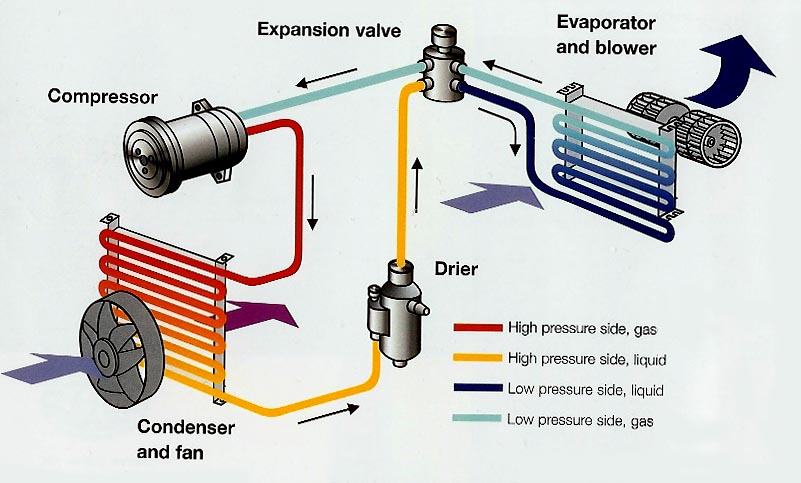


Automotive air conditioning systems operate using a closed-loop refrigeration cycle. This process removes heat from the vehicle cabin and releases it outside the vehicle.
Several components work together to accomplish this process:
Compressor
The compressor is the central component of the AC system. It compresses refrigerant gas and pushes it through the system.
Condenser
The refrigerant then flows into the condenser, where heat is released and the refrigerant changes from a gas into a liquid.
Expansion Valve
The expansion valve controls the flow of refrigerant entering the evaporator.
Evaporator
Inside the evaporator, the refrigerant absorbs heat from the cabin air, creating cool air that flows through the vehicle vents.
The refrigerant then cycles back through the system and repeats the process.
Vehicle manufacturers such as Ford Motor Company, General Motors, and Toyota Motor Corporation design these systems to maintain consistent cooling performance under varying environmental conditions.
What Is a Car Air Conditioning Recharge Kit?
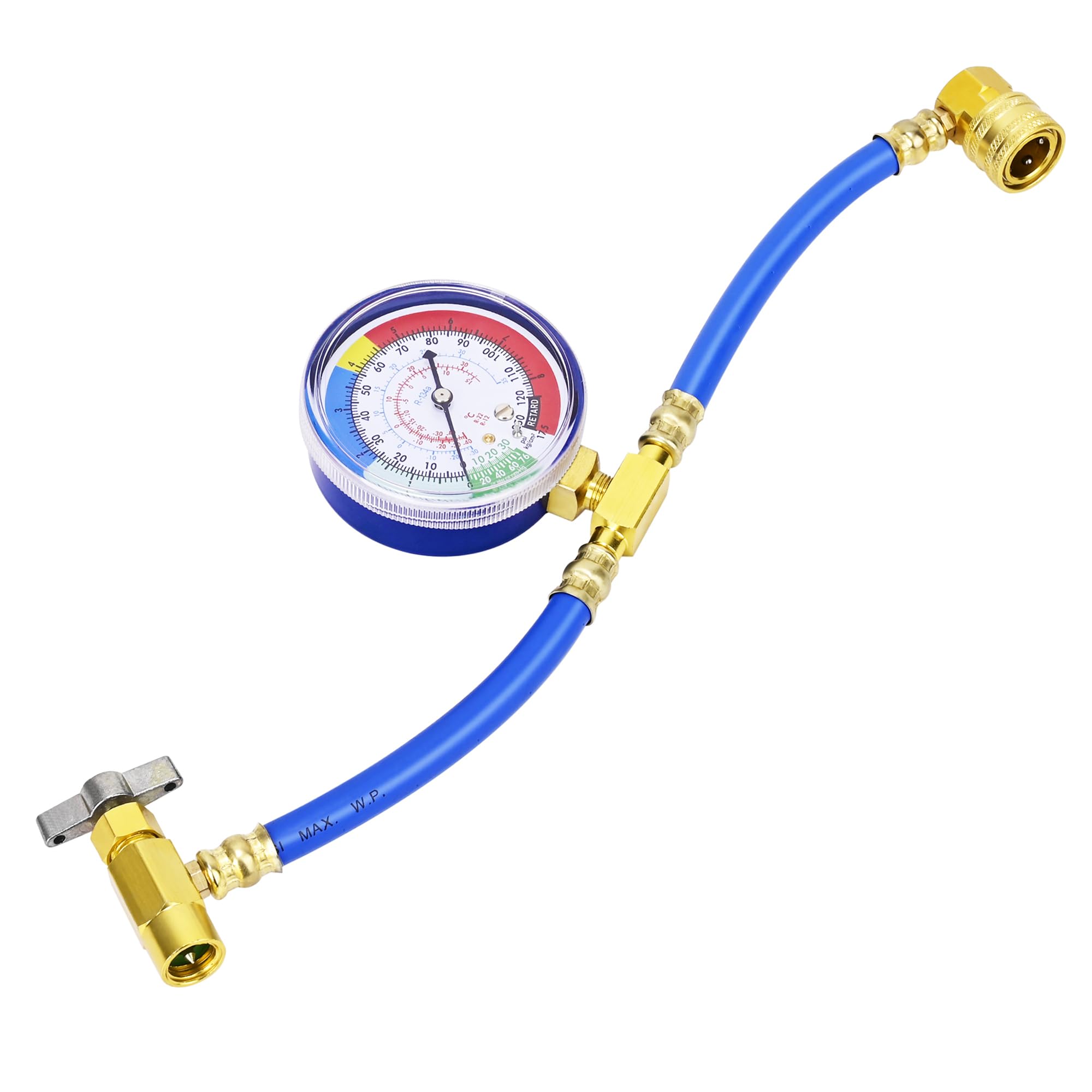

A car air conditioning recharge kit is a set of tools designed to add refrigerant back into a vehicle’s air conditioning system. These kits are commonly used when refrigerant levels become low and the AC system no longer cools effectively.
A typical auto air conditioner recharge kit includes:
-
A can of refrigerant
-
A pressure gauge
-
A hose with a connector
-
A trigger or valve for controlled release
The hose connects to the vehicle’s low-pressure service port, allowing refrigerant to flow into the AC system.
These kits are designed to simplify the process of recharging refrigerant levels without requiring extensive mechanical tools. However, understanding the vehicle’s AC system and refrigerant type is essential before attempting a recharge.
What Is Car AC Refrigerant Recharge?
A car AC refrigerant recharge refers to the process of adding refrigerant to an automotive air conditioning system to restore its cooling ability.
Refrigerant is a specialized chemical compound that changes between liquid and gas states during the cooling cycle. This phase change allows the refrigerant to absorb and release heat efficiently.
Many vehicles manufactured after the mid-1990s use the refrigerant known as R134a. Some newer vehicles use an environmentally friendlier refrigerant called R1234yf.
The recharge process restores the correct refrigerant pressure within the system so that cooling can function properly.
Signs That a Car AC System May Need Recharge
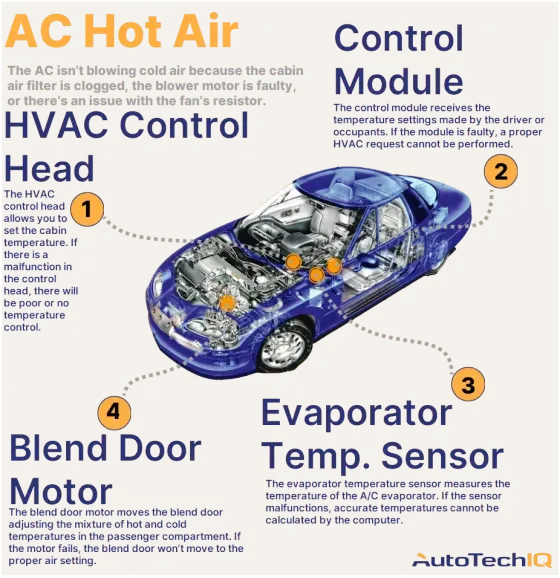

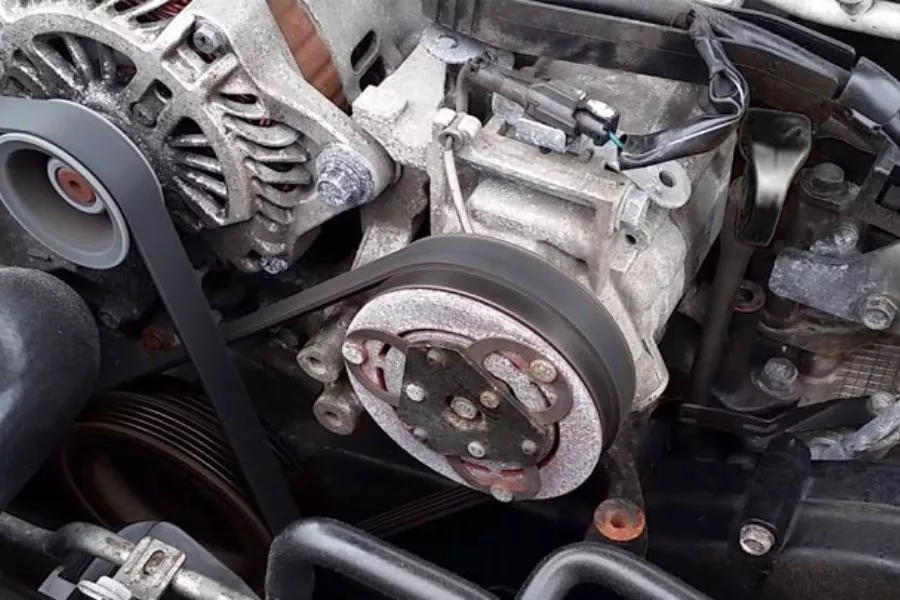
Drivers often notice several warning signs when refrigerant levels are low.
Warm Air From Vents
One of the most obvious signs is when the air conditioning system blows warm or slightly cool air instead of cold air.
Weak Airflow Cooling
The airflow from the vents may remain strong, but the temperature may not drop as expected.
AC Compressor Not Engaging
Low refrigerant pressure can prevent the compressor from activating.
Unusual AC Cycling
The compressor may repeatedly turn on and off if refrigerant pressure is unstable.
When these symptoms appear, some drivers explore options such as recharging the AC system using a car air conditioning recharge kit.
Why Refrigerant Levels Decrease in Vehicles
Automotive AC systems are sealed, but refrigerant levels can still decrease over time.
Several factors contribute to this issue:
Minor Leaks
Rubber seals, hoses, and connections can slowly leak refrigerant as they age.
Worn Components
Components such as compressors and valves may develop wear that affects system pressure.
Environmental Exposure
Temperature changes and vibration can gradually weaken seals and fittings.
System Age
Older vehicles often experience refrigerant loss as parts deteriorate.
These issues may eventually require a recharge air conditioner car process to restore refrigerant levels.
Understanding the Process of Recharging AC in a Car
Recharging a vehicle’s air conditioning system involves restoring the proper refrigerant pressure.
Although the exact process may vary depending on vehicle design, the general procedure includes several steps.
First, the low-pressure service port must be located. This port is where the recharge hose attaches.
Next, the vehicle engine and AC system are typically turned on so the refrigerant can circulate.
The recharge kit hose connects to the service port, allowing refrigerant to flow into the system. The pressure gauge helps monitor refrigerant levels and prevents overfilling.
When the correct pressure range is reached, the refrigerant flow is stopped and the system is disconnected.
Although this procedure may seem straightforward, improper handling of refrigerant can affect system performance.
Example Vehicle: Recharging the AC in a 2000 Chevy Blazer
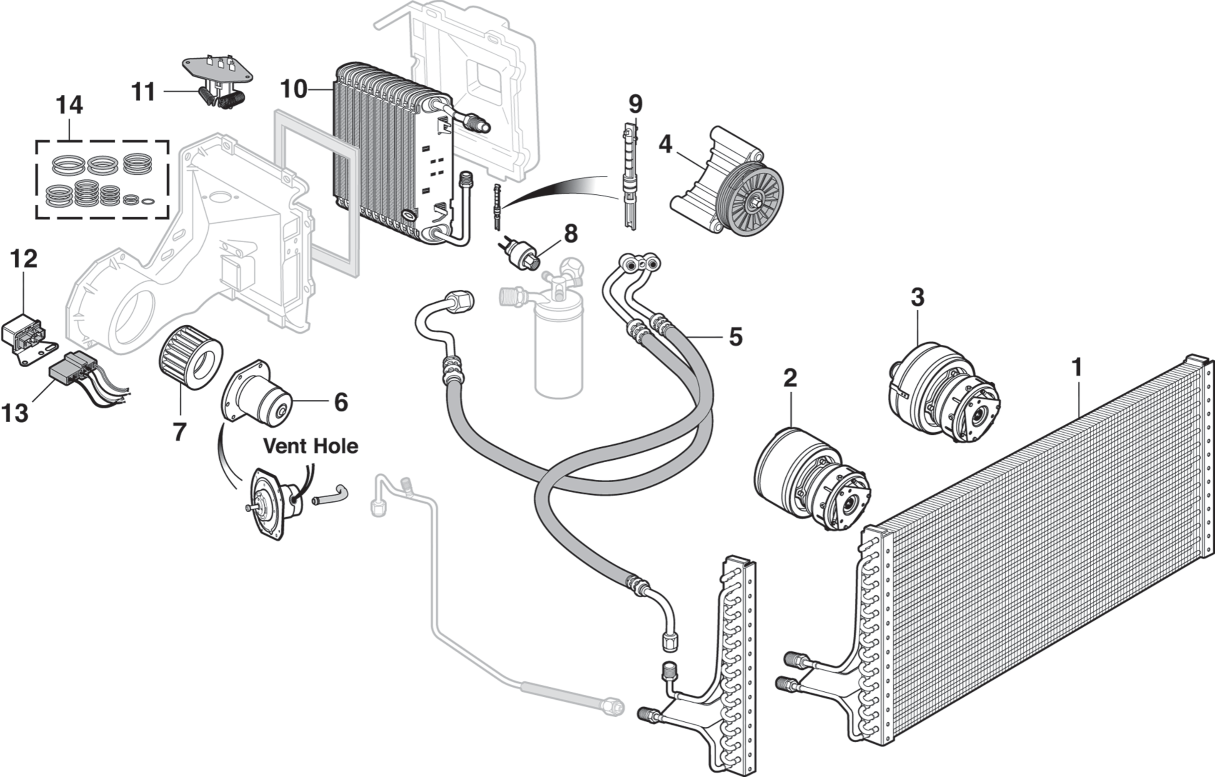


Some drivers search for information on how to recharge your car AC Chevy Blazer 2000. The Chevrolet Blazer produced around the year 2000 typically uses the refrigerant R134a.
In these vehicles, the low-pressure AC service port is located in the engine compartment along the refrigerant line between the compressor and evaporator.
When refrigerant levels drop, drivers may notice reduced cooling performance from the cabin vents.
Restoring refrigerant pressure with an appropriate recharge method can help return the system to normal cooling conditions.
Because older vehicles may have worn components or leaks, diagnosing the root cause of refrigerant loss is often important before performing a recharge.
Differences Between Professional AC Service and Recharge Kits
Vehicle owners often choose between professional servicing and using an auto air conditioner recharge kit.
Professional AC Service
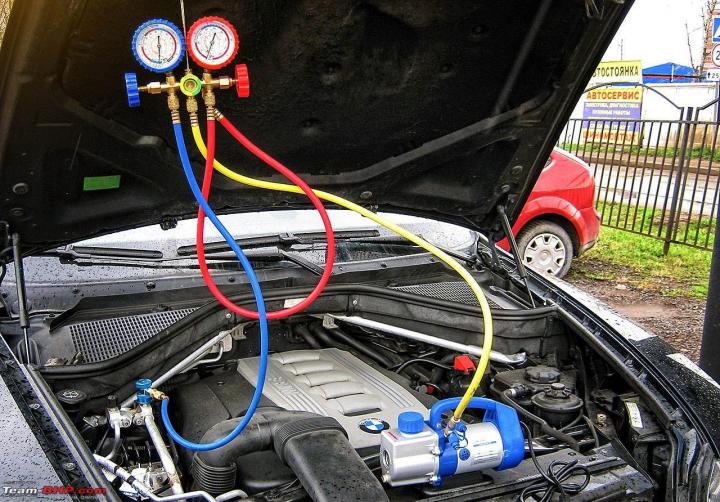
Automotive technicians use specialized tools such as recovery machines and vacuum pumps. These tools remove old refrigerant, eliminate moisture from the system, and refill the system with precise refrigerant levels.
Recharge Kits
Recharge kits allow refrigerant to be added without removing existing refrigerant from the system.
While they may restore cooling performance in some situations, they do not address deeper issues such as leaks or component failures.
Professional servicing is often recommended when the system has significant refrigerant loss or mechanical damage.
Environmental Considerations in Automotive AC Systems
Refrigerants used in vehicle air conditioning systems have environmental impacts, particularly if released into the atmosphere.
Government agencies such as the United States Environmental Protection Agency regulate the handling and disposal of refrigerants to reduce environmental harm.
Modern refrigerants are designed to reduce ozone depletion and minimize global warming potential compared with earlier chemicals such as R12, which was widely used before the 1990s.
Proper refrigerant handling helps prevent atmospheric pollution and supports environmental protection efforts.
Maintenance Practices for Vehicle Air Conditioning Systems
Maintaining a vehicle’s AC system can help prevent refrigerant loss and maintain cooling performance.
Some recommended maintenance practices include:
-
Running the air conditioner periodically, even during cooler months
-
Inspecting AC hoses and connections for leaks
-
Replacing cabin air filters regularly
-
Monitoring unusual noises from the compressor
-
Addressing cooling issues early
Routine maintenance can extend the lifespan of the air conditioning system and reduce the likelihood of needing frequent refrigerant recharges.
Automotive Cooling Technology and System Efficiency
Vehicle air conditioning systems have evolved significantly over the past several decades.
Modern vehicles often integrate climate control systems with advanced electronics that automatically regulate cabin temperature. Sensors monitor cabin air conditions and adjust airflow, compressor speed, and refrigerant circulation accordingly.
Manufacturers such as Honda Motor Company, Hyundai Motor Company, and Tesla continue to develop more efficient cooling technologies.
Electric vehicles and hybrid vehicles use specialized heat pump systems that provide both heating and cooling while minimizing energy consumption.
These advancements highlight the ongoing evolution of automotive climate control systems.
When an AC Recharge May Not Solve the Problem
While low refrigerant is a common reason for reduced cooling performance, other mechanical issues may also affect the air conditioning system.
Potential problems include:
-
Compressor failure
-
Clogged expansion valve
-
Electrical faults
-
Blocked condenser airflow
-
Refrigerant leaks
In these situations, simply adding refrigerant may not restore proper operation. A full system inspection may be required to identify and repair the underlying issue.
The Importance of Proper Refrigerant Levels
Maintaining the correct refrigerant level is essential for the efficiency and reliability of an automotive air conditioning system.
Too little refrigerant prevents the system from absorbing enough heat, while too much refrigerant can increase pressure and reduce cooling efficiency.
For this reason, accurate pressure monitoring is essential when recharging a system using a car air conditioning recharge kit or other service methods.
Proper refrigerant balance ensures optimal cooling performance and helps protect key components such as the compressor.
Conclusion
Vehicle air conditioning systems rely on refrigerant circulation to remove heat from the cabin and provide comfortable driving conditions. Over time, refrigerant levels may decrease due to small leaks, aging components, or normal system wear.
In these cases, drivers sometimes consider options such as a car air conditioning recharge kit or vehicle air conditioner recharge kit to restore cooling performance.
Understanding how automotive AC systems function, how refrigerant circulates through components, and how recharge processes work can help vehicle owners make informed decisions about maintaining their vehicle’s cooling system.
As automotive technology continues to evolve, air conditioning systems will remain an essential feature for comfort, efficiency, and climate control in vehicles across the United States.