The standard closet size plays an important role in how functional and comfortable a home feels. In residential properties across the UK and USA, closets are no longer treated as secondary spaces. Instead, they are considered essential storage areas that support daily routines, organisation, and long-term usability of a home.
Understanding standard closet dimensions helps homeowners, builders, and designers plan interiors that balance storage needs with available floor space. While closet sizes vary by home age, region, and layout, there are widely accepted measurements that define what is considered practical and compliant with modern building expectations.
This article explores closet size, standard closet depth, standard closet width, and typical closet dimensions, using clear explanations suitable for both renovations and new construction.
What Is Meant by Standard Closet Dimensions
The term standard closet dimensions refers to commonly accepted measurements that allow a closet to function properly. These standards are not always strict legal requirements, but they are based on ergonomics, storage efficiency, and building norms.
A functional closet must allow:
-
Clothing to hang without obstruction
-
Doors to open comfortably
-
People to access items easily
These needs influence how deep a closet should be, as well as its width and overall layout.
In many cases, standards are shaped by residential building codes and design guidelines used by professionals.
Typical Closet Dimensions in Residential Homes
Reach-In Closets
Reach-in closets are the most common type found in bedrooms. They are designed for access from the front only and typically include a single rod and shelf.
Typical closet dimensions for reach-in closets are:
-
Width: 4 to 8 feet
-
Depth: 24 inches (minimum)
-
Height: 8 feet or aligned with ceiling height
The standard closet depth of 24 inches is based on the space needed for clothes to hang freely without touching the back wall or doors.
Walk-In Closets
Walk-in closets are larger and allow a person to step inside. These are common in newer homes and master bedrooms.
Typical walk-in closet measurements include:
-
Minimum width: 5 feet
-
Minimum depth: 5 feet
-
Ideal depth for hanging clothes on both sides: 7 feet or more
Walk-in closets require careful planning so that hanging space, shelving, and walking clearance work together.
Standard Closet Depth Explained
One of the most common questions in residential design is how deep should a closet be. Depth directly affects usability.
Why 24 Inches Is the Standard
The standard closet depth of 24 inches comes from the average width of clothing on hangers. Most garments require between 20 and 22 inches of space when hung properly. The extra clearance prevents wrinkling and allows doors to close without interference.
If a closet is shallower than 24 inches:
-
Clothes may press against doors
-
Sliding doors may not function smoothly
-
Storage becomes inefficient
This is why how deep is a closet is often answered with “about two feet” for standard residential use.
Closet Depth Variations
While 24 inches is standard, depth can vary depending on the closet’s function.
-
Coat closets may need 26 to 28 inches to accommodate bulky outerwear
-
Children’s closets can function with slightly less depth
-
Linen closets often range from 18 to 24 inches since hanging space is minimal
Depth should always align with intended use rather than arbitrary measurements.
Standard Closet Width and Its Importance
The standard closet width determines how much storage can be installed along a single wall. A closet that is too narrow limits rod length and shelving options.
Minimum Closet Width
For reach-in closets:
-
Minimum width: 4 feet
-
Comfortable width: 6 to 8 feet
A wider closet allows for multiple storage zones, such as double hanging rods or sections for folded items.
Walk-In Closet Width
Walk-in closets require additional width to maintain walking clearance. A common planning rule is:
-
24 inches for hanging space
-
36 inches for walkway
This results in a standard closet length of around 7 feet when storage is placed on one side, and up to 9 feet when storage lines both walls.
Standard Closet Length in Bedroom Layouts
The standard closet length is closely tied to room size. In smaller bedrooms, closets are often integrated along one wall to preserve floor space.
Typical closet lengths include:
-
Small bedrooms: 4 to 6 feet
-
Medium bedrooms: 6 to 8 feet
-
Primary bedrooms: 8 feet or more
Longer closets allow better organisation by category, reducing overcrowding and improving accessibility.
Closet Size and Building Regulations
In the USA, residential closets are often designed with reference to guidelines from International Residential Code, which influences minimum clearances and safety standards.
In the UK, space planning commonly aligns with guidance from NHBC and similar housing standards, although exact closet sizes may vary by developer and property age.
While these organisations do not always mandate exact closet sizes, they influence accepted norms used by architects and builders.
How Deep Should a Closet Be for Different Uses
Closet depth should reflect what is being stored.
Hanging Clothes
For standard garments:
-
Minimum depth: 24 inches
-
Preferred depth: 26 inches for sliding doors
Shelving and Folded Items
Shelving-only closets can be shallower:
-
Depth range: 16 to 20 inches
Mixed-Use Closets
Closets with both hanging and shelving often combine different depths within the same unit to maximise efficiency.
Understanding how deep is a closet for each use prevents wasted space and improves organisation.
Closet Size and Door Types
Door selection affects usable closet space.
Hinged Doors
Hinged doors require clearance to swing open but allow full access to the closet interior.
Sliding Doors
Sliding doors are common in reach-in closets. They reduce clearance needs but require extra depth so clothes do not interfere with door tracks.
Bi-Fold Doors
Bi-fold doors sit between hinged and sliding doors in terms of clearance and depth requirements.
When planning standard closet dimensions, door type should be considered early in the design process.
Interior Layout and Storage Zones
A well-proportioned closet size allows for defined storage zones:
-
Upper shelves for seasonal items
-
Hanging rods at eye level
-
Lower storage for shoes or bins
Without adequate depth and width, these zones overlap, reducing functionality.
Typical Closet Dimensions in Older vs Newer Homes
Older homes, particularly in the UK and early US housing stock, often feature smaller closets. It was common for closets to be:
-
Narrower than 4 feet
-
Shallower than 24 inches
Newer homes generally follow modern expectations, offering larger and more efficient closets.
Renovations often aim to bring older closets closer to standard closet dimensions to meet current lifestyle needs.
Closet Depth and Accessibility
Accessibility standards influence closet depth and layout, particularly in multi-generational homes.
Deeper closets allow:
-
Easier reach
-
Better visibility
-
Safer movement
In accessible design, walkways of at least 36 inches are often preferred inside walk-in closets.
Space Planning in Apartments and Condos
In urban apartments, especially in the UK and major US cities, space is limited. Designers often rely on precise closet dimensions to maximise storage without reducing living area.
Shallower closets may be used strategically for:
-
Hallway storage
-
Utility closets
-
Guest rooms
These spaces still follow basic rules for depth and width to remain functional.
Closet Size and Ceiling Height
While floor dimensions receive the most attention, vertical space is equally important. Most closets align with standard ceiling heights of 8 or 9 feet.
Upper shelves typically sit:
-
80 to 84 inches from the floor
Using vertical space effectively can compensate for smaller floor dimensions.
Common Measurement Mistakes
Mistakes in closet planning often stem from misunderstanding standard closet depth and width.
Common issues include:
-
Measuring wall-to-wall without accounting for door thickness
-
Ignoring hanger width
-
Underestimating walking clearance
Accurate measurements ensure closets remain functional long after installation.
Closet Dimensions and Long-Term Use
Closets should be designed for flexibility. Storage needs change over time, and adaptable closet size allows for reconfiguration.
A closet built to typical closet dimensions can accommodate:
-
Adjustable shelving
-
Additional hanging rods
-
Future storage systems
This adaptability adds long-term value to a home.
Visual Balance and Room Proportion
Closets affect how a room feels. Oversized closets can make bedrooms feel cramped, while undersized closets may appear inadequate.
Balancing standard closet width, depth, and length with room size ensures visual harmony and usability.
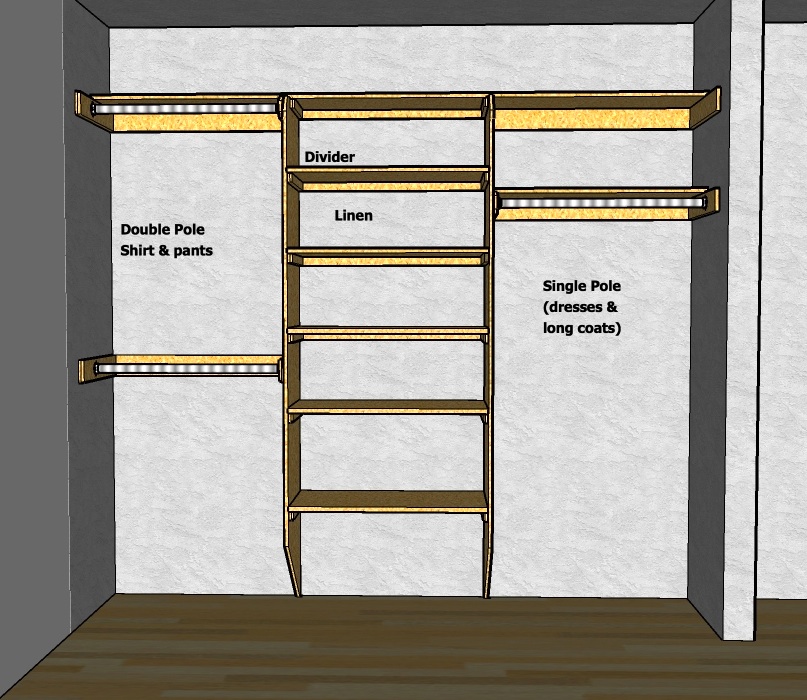
Practical Examples of Standard Closet Dimensions


-
Reach-in closet: 6 ft wide × 24 in deep
-
Walk-in closet: 7 ft × 7 ft minimum
-
Linen closet: 18–24 in deep × 3 ft wide
These examples reflect common residential standards used in both UK and US homes.
Closet Size and Property Value
While closets are not always the most visible feature, adequate standard closet dimensions contribute to overall property appeal. Buyers often evaluate storage capacity as part of functionality.
Homes with practical closet sizes tend to:
-
Feel more organised
-
Support modern living needs
-
Require fewer storage additions
Conclusion
Understanding standard closet size and related measurements such as standard closet depth, standard closet width, and standard closet length is essential for effective residential design. Whether planning a new build or updating an existing home, using typical closet dimensions ensures closets remain functional, accessible, and adaptable.
By considering how deep a closet should be, how wide it needs to function comfortably, and how it fits within the overall room layout, homeowners in the UK and USA can create storage spaces that support daily life without compromising comfort or design balance.