Red twig dogwood is widely recognised for its striking red stems, especially during winter when most plants lose visual interest. In landscapes across the UK and USA, this shrub is valued not for flowers alone, but for its year-round structure and seasonal contrast. Often referred to as red twigged dogwood, red dogwood bush, or red osier dogwood, this plant plays an important role in naturalistic and managed garden designs.
Unlike flowering shrubs that peak briefly, red twig dogwood bushes contribute texture, colour, and form throughout the year. Their vibrant stems stand out against snow, bare soil, and evergreen backdrops, making them a reliable choice for winter interest. The plant’s adaptability to different soils and climates further supports its popularity in temperate regions.
Botanical Identity and Classification
The plant commonly known as red twig dogwood belongs to the Cornus genus. Its most familiar species is Cornus sericea, also known as red osier dogwood. In some references, it is still listed under its older name, Cornus stolonifera.
Other closely related forms include Cornus alba, which is sometimes grouped under the broader category of cornus red twig plants due to similar stem colour and growth habit.
These shrubs are deciduous, meaning they lose their leaves in autumn, allowing their colourful stems to become the main visual feature during colder months.
Visual Characteristics of Red Twig Dogwood Bushes
The most defining feature of dogwood red twig shrubs is the bright red to deep crimson colour of young stems. This pigmentation intensifies in winter after leaf drop and exposure to cold temperatures.
Key visual traits include:
-
Upright to spreading growth habit
-
Smooth, flexible stems
-
Oval green leaves during the growing season
-
White to cream-coloured flower clusters in late spring
-
White or pale berries in late summer
Older stems gradually fade to duller tones, which is why regular pruning is often associated with maintaining strong colour.
Seasonal Changes and Landscape Interest
Spring and Summer
In spring, red twigged dogwood produces fresh green foliage followed by small clusters of flowers. While these blooms are subtle rather than showy, they contribute to pollinator activity. During summer, the shrub forms a dense, leafy structure that works well as a background planting or informal screen.
Autumn
As temperatures cool, leaves often turn shades of yellow or red before falling. This transitional colour adds a short-lived but attractive autumn display.
Winter
Winter is when red dogwood truly stands out. With leaves gone, the red stems become fully visible, creating contrast against muted winter landscapes. This makes redwood dogwood bushes especially effective near paths, water features, or evergreen plantings.
Natural Habitat and Adaptability
In nature, red osier dogwood is commonly found along riverbanks, wetlands, and woodland edges. This origin explains its tolerance for moist soils and occasional flooding. At the same time, it adapts well to standard garden conditions, provided extreme drought is avoided.
In both the UK and USA, red twig dogwood planting is common in:
-
Rain gardens
-
Wildlife-friendly landscapes
-
Erosion control zones
-
Mixed shrub borders
Its ability to spread through underground stems allows it to stabilise soil, particularly on slopes or near water.
Growth Habit and Mature Size
A mature red twig dogwood bush typically reaches 6 to 9 feet in height and a similar width, depending on variety and growing conditions. The shrub spreads naturally, forming thickets over time.
This spreading habit can be an advantage in large spaces but may require management in smaller gardens. When given adequate room, redtwig dogwood develops a natural, informal appearance that suits countryside and suburban landscapes alike.
Red Twig Dogwood Planting Considerations
Soil Preferences
Red dogwood bush plants tolerate a wide range of soils, from clay to loam, as long as moisture is available. While they prefer slightly acidic to neutral soil, they are not overly sensitive to pH levels.
Poor drainage is usually less of a problem than prolonged dryness. In compacted soils, incorporating organic matter improves structure and moisture retention.
Light Requirements
Full sun encourages the brightest stem colour, although partial shade is tolerated. In shadier conditions, growth remains healthy, but stem colour may be less intense.
In the UK, full sun exposure is generally beneficial. In warmer regions of the USA, light afternoon shade can reduce stress during peak summer heat.
Establishment and Early Care
During the first year after red osier dogwood planting, consistent watering supports root establishment. Mulching helps retain moisture and regulate soil temperature.
Once established, cornus red twig shrubs require minimal intervention. Their resilience makes them suitable for low-maintenance landscapes.
Pruning and Stem Renewal
Pruning plays a central role in maintaining the visual quality of red twigged dogwood. The brightest red stems are produced on young growth, typically one to two years old.
Common pruning approaches include:
-
Removing older stems at ground level
-
Thinning congested growth
-
Encouraging new shoots
This process not only enhances colour but also maintains airflow and shape. Pruning is usually carried out in late winter or early spring before new growth begins.
Red Dogwood Bushes in Garden Design
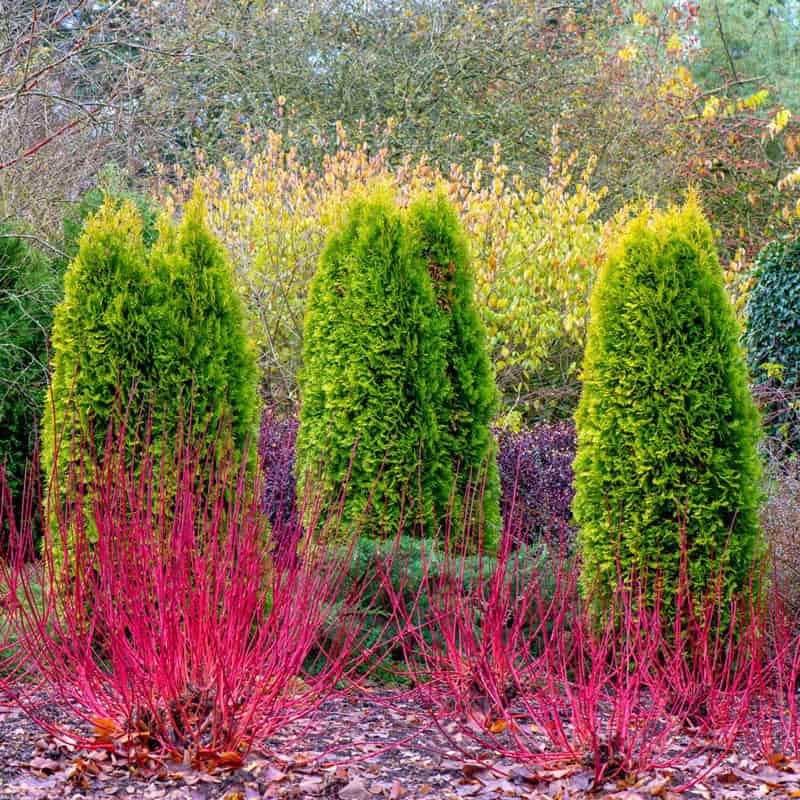
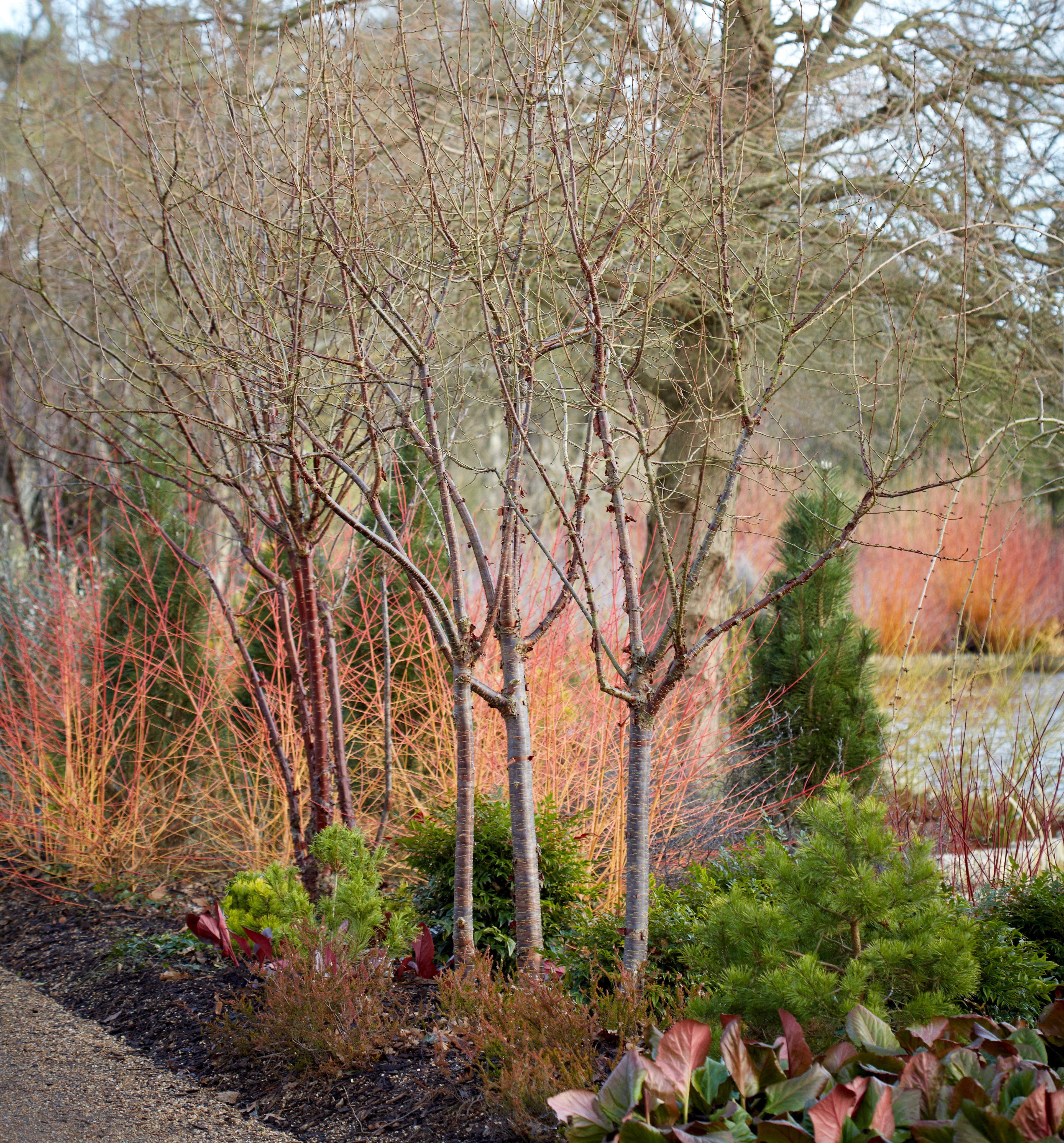

Red twig dogwood bushes are versatile design elements. Their bold winter stems act as visual anchors in landscapes that might otherwise appear dormant.
Design uses include:
-
Informal hedging
-
Back-of-border structure
-
Natural screening
-
Waterside planting
They pair well with evergreen shrubs, ornamental grasses, and spring bulbs, creating contrast across seasons.
Wildlife Value of Red Twig Dogwood
Beyond aesthetics, red dogwood provides ecological benefits. Flowers attract pollinators in spring, while berries support birds and small mammals later in the year.
Dense branching offers shelter, making redtwig dogwood a useful addition to wildlife-friendly gardens. In managed landscapes, this ecological role complements visual appeal without requiring intensive care.
Moisture Management and Water Needs
Because of their natural habitat, red osier dogwood shrubs tolerate wetter soils better than many ornamental plants. However, they also adapt to average garden moisture levels.
During extended dry periods, supplemental watering supports healthy growth and prevents stress. Mulching reduces evaporation and improves long-term soil condition.
Fertilisation and Soil Nutrition
In most garden soils, red twig dogwood does not require frequent fertilisation. Overfeeding can result in excessive leafy growth at the expense of stem colour.
If soil fertility is low, a light application of balanced fertiliser in early spring is sufficient. Organic compost incorporated around the base also supports steady growth.
Common Issues and Maintenance Concerns
Fading Stem Colour
Dull or brownish stems often indicate ageing growth. Regular pruning encourages fresh stems with stronger colour.
Overcrowding
Because redwood dogwood bushes spread naturally, overcrowding may occur over time. Thinning helps maintain shape and prevents competition for light.
Pests and Diseases
These shrubs are generally resistant to serious pests and diseases. Occasional leaf spots or minor insect activity rarely cause lasting damage.
Red Twig Dogwood in Urban and Suburban Settings
In urban landscapes, red dogwood bush plants soften hard lines created by fences, buildings, and paths. Their tolerance for varying soil conditions makes them suitable for redevelopment sites and roadside plantings.
Suburban gardens often use red twigged dogwood as a seasonal focal point, particularly in winter when lawns and borders lack colour.
Climate Suitability in the UK and USA
Red twig dogwood thrives in temperate climates with cold winters. It performs well across most of the UK and in northern and central regions of the USA.
Cold exposure enhances stem colour, making winter chill an advantage rather than a limitation. In milder regions, colour may be less vivid but still noticeable.
Longevity and Landscape Stability
When properly maintained, cornus red twig shrubs can remain in place for decades. Their ability to regenerate from the base ensures long-term presence even after heavy pruning.
This longevity makes red dogwood a stable element in landscape planning, reducing the need for frequent replacement.
Relationship With Water Features and Natural Areas
Because of their moisture tolerance, red osier dogwood shrubs are commonly planted near ponds, streams, and drainage areas. Their roots help stabilise soil, while their stems add seasonal interest.
In naturalised areas, redtwig dogwood blends seamlessly with native grasses and perennials, reinforcing a landscape that feels both structured and organic.
Environmental Considerations
Red twig dogwood supports sustainable gardening practices. Its low input requirements, wildlife value, and soil-stabilising properties align well with environmentally conscious landscape design.
Avoiding excessive pruning and chemical treatments allows the shrub to perform naturally while maintaining its visual strengths.
Visual Rhythm and Repetition in Planting
Planting multiple red twig dogwood bushes together creates visual rhythm, especially in winter. Repetition of red stems across a landscape draws the eye and creates cohesion.
This technique is often used in public parks, large gardens, and estate landscapes throughout the UK and USA.
Integration With Other Shrubs and Perennials
Red dogwood works best when combined thoughtfully with other plants. Evergreen shrubs provide contrast, while perennials and grasses soften the transition between seasons.
The plant’s neutral summer appearance allows it to support brighter flowering species without competing for attention.
Long-Term Care Perspective
From a long-term perspective, red twig dogwood is valued for reliability rather than constant change. Its predictable growth pattern and seasonal highlights make maintenance straightforward.
Observation and occasional intervention are usually enough to keep red twigged dogwood healthy and visually effective.
Conclusion
Red twig dogwood remains one of the most dependable shrubs for year-round landscape interest in the UK and USA. Known variously as red dogwood bush, red osier dogwood, or cornus red twig, it combines resilience, ecological value, and striking winter colour.
Through thoughtful placement, periodic pruning, and an understanding of its natural growth habits, redtwig dogwood continues to shape landscapes with subtle strength and seasonal clarity.