Stairs and deck structures are fundamental elements in residential buildings across the UK and the USA. Beyond their functional role, staircases influence safety, comfort, and spatial flow within a home or outdoor living area. Whether installed indoors as part of a multi-storey house or outdoors connecting a deck to ground level, stair design depends heavily on accurate dimensions and consistent construction standards.
Discussions around stair width, stair size, and the dimensions of a standard staircase are not purely technical. These measurements affect how people move through spaces every day, how furniture is carried between levels, and how safely users can ascend and descend. This article examines stairs and deck construction in detail, focusing on standard stair dimensions, staircase standard width, stair stringers, and how these elements are interpreted in UK and USA residential contexts.
The Role of Stairs in Residential Design
Stairs act as vertical connectors between levels, making them essential to both interior layouts and exterior access points such as decks and patios. In indoor settings, staircases often serve as architectural features, while outdoor deck stairs prioritise durability and weather resistance.
Despite aesthetic differences, both indoor and outdoor stairs follow similar principles. Consistent riser height, adequate tread depth, and appropriate stair width all contribute to safety and usability. Poorly proportioned stairs increase the risk of trips and falls, making dimensional accuracy a core requirement rather than a design preference.
In both countries, building regulations establish minimum standards to ensure staircases are safe and accessible. In the USA, residential stair dimensions are largely guided by the International Residential Code, while in the UK, guidance comes from UK Building Regulations, particularly Approved Document K.
Understanding Stair Width and Its Importance
Stair width refers to the clear horizontal distance between the finished surfaces of stair rails or walls. This measurement directly affects how comfortably people can use the staircase and whether it meets regulatory requirements.
A common question in residential construction is how wide should stairs be. In the USA, the standard stair width for residential use is typically a minimum of 36 inches (approximately 914 mm). This measurement allows sufficient space for safe movement and emergency egress. In the UK, the minimum width is often slightly narrower, with 800 mm commonly accepted for private staircases, though wider stairs are encouraged where space allows.
While these figures represent minimums, many homeowners and designers choose to exceed them. Wider stairs improve accessibility, accommodate furniture movement, and create a more open visual effect. For deck stairs, additional width can also improve stability and comfort when multiple people are using the steps simultaneously.
Standard Stair Dimensions Explained
Standard stair dimensions include several interconnected measurements: riser height, tread depth, stair width, and overall staircase size. Together, these determine the ergonomics of the staircase.
In the USA, typical residential standards specify a maximum riser height of 7.75 inches (197 mm) and a minimum tread depth of 10 inches (254 mm). In the UK, risers are usually limited to 220 mm, with minimum tread depths of 220 mm, though preferred dimensions are often more generous.
The size of standard stairs is designed to align with natural walking patterns. When risers are too high or treads too shallow, users are more likely to misstep. Consistency across the entire staircase is critical, as even small variations can disrupt rhythm and balance.
Standard stair dimensions are not arbitrary. They are based on long-established ergonomic research and refined through building codes to reduce accident risk.
Size of a Standard Staircase in Residential Homes
The size of a standard staircase refers to the total horizontal and vertical space it occupies within a building. This includes the stair run, rise, landings, and headroom clearance.
In typical UK homes, staircases are often more compact due to space constraints, particularly in terraced or semi-detached properties. Despite smaller footprints, they must still comply with minimum headroom requirements, usually around 2 metres measured vertically from the pitch line.
In the USA, homes often feature larger staircases, especially in detached properties. A standard straight staircase connecting two floors may require 10 to 12 feet of horizontal run, depending on ceiling height and riser dimensions.
Deck stairs follow similar principles but are influenced by outdoor conditions. The total rise is determined by deck height, while the run must account for safe descent and available yard space.
Staircase Standard Width and Accessibility
Staircase standard width is closely linked to accessibility considerations. While private homes are not always required to meet full accessibility standards, wider stairs improve usability for people of all ages and abilities.
In the USA, accessibility guidelines from organisations such as the Americans with Disabilities Act influence public and multi-family buildings. Although these standards do not always apply to single-family homes, they have shaped broader expectations around comfort and safety.
In the UK, inclusive design principles increasingly encourage wider staircases, even in private residences. Wider stairs accommodate handrails on both sides, reduce congestion, and support safer movement during emergencies.
For deck stairs, width also affects outdoor usability. Wider steps allow for side-by-side walking and make the transition between indoor and outdoor spaces more comfortable.
Stair Size and Proportion
Stair size is not limited to width alone. Proportion plays a key role in how stairs feel and function. A well-proportioned staircase balances riser height and tread depth to create a natural stride.
Builders often use established formulas, such as the relationship between riser and tread dimensions, to maintain comfort. While these formulas are embedded in building standards, they also reflect practical experience.
In both the UK and USA, consistent stair size across all steps is mandatory. Variations greater than a few millimetres can create tripping hazards. This requirement applies equally to indoor staircases and outdoor deck stairs.
Stair Stringers and Structural Support

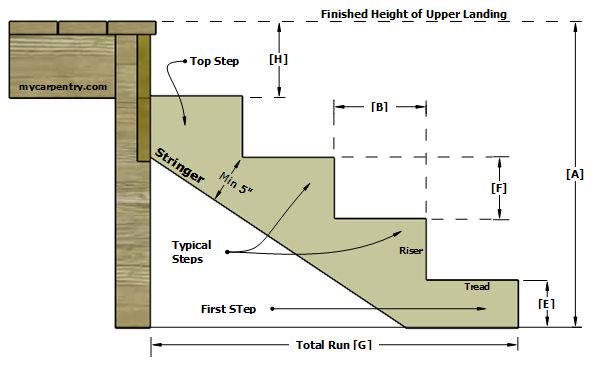
Stair stringers are the structural components that support the treads and risers. Typically cut from timber or fabricated from metal, stringers transfer the load of the staircase to the supporting structure.
In residential construction, timber stringers are common for both indoor stairs and deck stairs. The number and spacing of stringers depend on stair width and material thickness. Wider stairs usually require additional stringers to prevent flexing and ensure long-term stability.
For deck stairs, stringers must also withstand outdoor conditions. Pressure-treated wood or weather-resistant materials are often used to reduce the impact of moisture and temperature changes.
Properly designed stair stringers contribute to both safety and durability. Inadequate support can lead to sagging steps, uneven surfaces, and premature structural failure.
Dimensions of Standard Staircases for Decks
Deck stairs differ slightly from indoor staircases due to their exposure to weather and their role as transitional elements. However, the core dimensions remain similar.
In the USA, deck stair dimensions generally follow the same riser and tread requirements as indoor stairs, as outlined in residential building codes. In the UK, external stairs may have slightly different guidelines, particularly regarding slip resistance and drainage.
Deck stair width is often influenced by the size of the deck itself. Larger decks typically benefit from wider stairs, creating a balanced appearance and improving access to outdoor spaces.
Landings at the top and bottom of deck stairs are also important. Adequate landing size ensures a safe transition between levels, particularly when doors open directly onto the stair area.
How Wide Should Stairs Be for Comfort?
The question of how wide should stairs be goes beyond minimum code requirements. Comfort, aesthetics, and future needs all play a role.
In residential settings, stairs wider than the minimum often feel more inviting and are easier to use. A width of 900 mm to 1 metre is commonly considered comfortable in both UK and USA homes, though this depends on available space.
For deck stairs, additional width improves safety when carrying items such as furniture or garden equipment. It also accommodates social use, where multiple people may use the stairs at once.
Ultimately, stair width should be viewed as an investment in usability rather than a constraint to be minimised.
Standard Stair Dimensions and Safety Considerations
Safety is the primary reason building codes define standard stair dimensions. Falls on stairs are a significant cause of injury in residential environments, making compliance with dimensional standards essential.
Key safety-related measurements include uniform riser height, adequate tread depth, sufficient headroom, and appropriate handrail placement. Inconsistent stair dimensions disrupt walking rhythm and increase accident risk.
Handrails are typically required when stairs exceed a certain number of risers. Their placement affects the effective stair width, as handrails must not encroach excessively into the walking path.
Both UK and USA regulations emphasise the importance of visual contrast and slip-resistant surfaces, particularly for external deck stairs.
Staircases in Renovation and New Construction
In renovation projects, existing staircases may not meet current standards. While some allowances are made for older buildings, significant alterations often require compliance with modern dimensions.
In the UK, renovations are assessed under building control to ensure safety improvements are made where practicable. In the USA, local building departments enforce code compliance for new and altered stairs.
New construction offers greater flexibility in staircase design. Architects can integrate stairs into the overall layout, optimising size, width, and orientation for both function and aesthetics.
Deck additions also require careful planning. Stair dimensions must align with deck height, site conditions, and regulatory requirements.
Visual Impact of Staircases and Deck Stairs
Beyond functionality, stairs contribute to the visual identity of a space. A well-proportioned staircase can enhance interior flow, while a thoughtfully designed deck stair can improve outdoor integration.
Wider stairs often appear more welcoming and substantial. In contrast, narrow stairs may feel confined, even if they meet minimum standards.
Material choices also influence perception. Timber, metal, and composite materials each interact differently with stair dimensions and proportions.
While aesthetics vary by style and preference, adherence to standard stair dimensions provides a reliable foundation for visually pleasing designs.
Long-Term Performance and Durability
Staircases are subject to frequent use, making durability a key consideration. Proper dimensions reduce wear by distributing loads evenly across treads and stringers.
Outdoor deck stairs face additional challenges, including moisture, temperature fluctuations, and UV exposure. Accurate stair size and appropriate materials help mitigate these factors.
Regular inspection and maintenance support long-term performance. Loose treads, damaged stringers, or uneven steps should be addressed promptly to maintain safety.
Conclusion
Stairs and deck structures play a central role in residential environments across the UK and the USA. Understanding stair width, standard stair dimensions, and the size of a standard staircase provides clarity for both new construction and renovation projects.
From the structural importance of stair stringers to the ergonomic considerations behind riser and tread measurements, stair design is a balance of safety, comfort, and practicality. While minimum standards establish a baseline, thoughtful consideration of how wide stairs should be and how they integrate into living spaces leads to better outcomes.
By respecting established guidelines from organisations such as the International Residential Code and UK Building Regulations, homeowners and builders can create staircases and deck stairs that are reliable, comfortable, and well suited to long-term use.